


The new stage, featuring sights, vineyards, and views of the Rhine
Vine-covered hills, flowers along the roadside, sweeping views of the Rhine: This stage of the RheinTerrassenWeg (RTW) The route between Oppenheim and Nierstein showcases just how beautiful our region’s landscape is. Culturally interesting stops are, so to speak, the icing on the cake—a true blend of city, countryside, and river. The new RTW route near Oppenheim opens up even more of this beauty. It now leads directly to the sights of this charming town: the imposing St. Catherine’s Church, the deep cellar labyrinth, and the picturesque half-timbered houses. Marina Noble takes us along for the ride. Since she and her husband Rainer are also serving as trail sponsors for this route, she also offers insights into their responsibilities. Be sure to read the sidebars to find out why she sometimes gets frustrated.
The main path now leads directly into Oppenheim's Old Town
The Oppenheim-Nierstein section of the RTW trail has never lacked cultural highlights. Some experienced hikers therefore describe this section as the most varied part of the a total of about 75 kilometers long long-distance hiking trail between Mainz and Worms. Until now, you had to take a detour to also Oppenheim „to take along.“ The old route ran above the village toward Nierstein. Now you'll follow the official main path directly into town and to the sights. If you're coming from the south (i.e., from Guntersblum/Dienheim), the signpost will point you to the right.
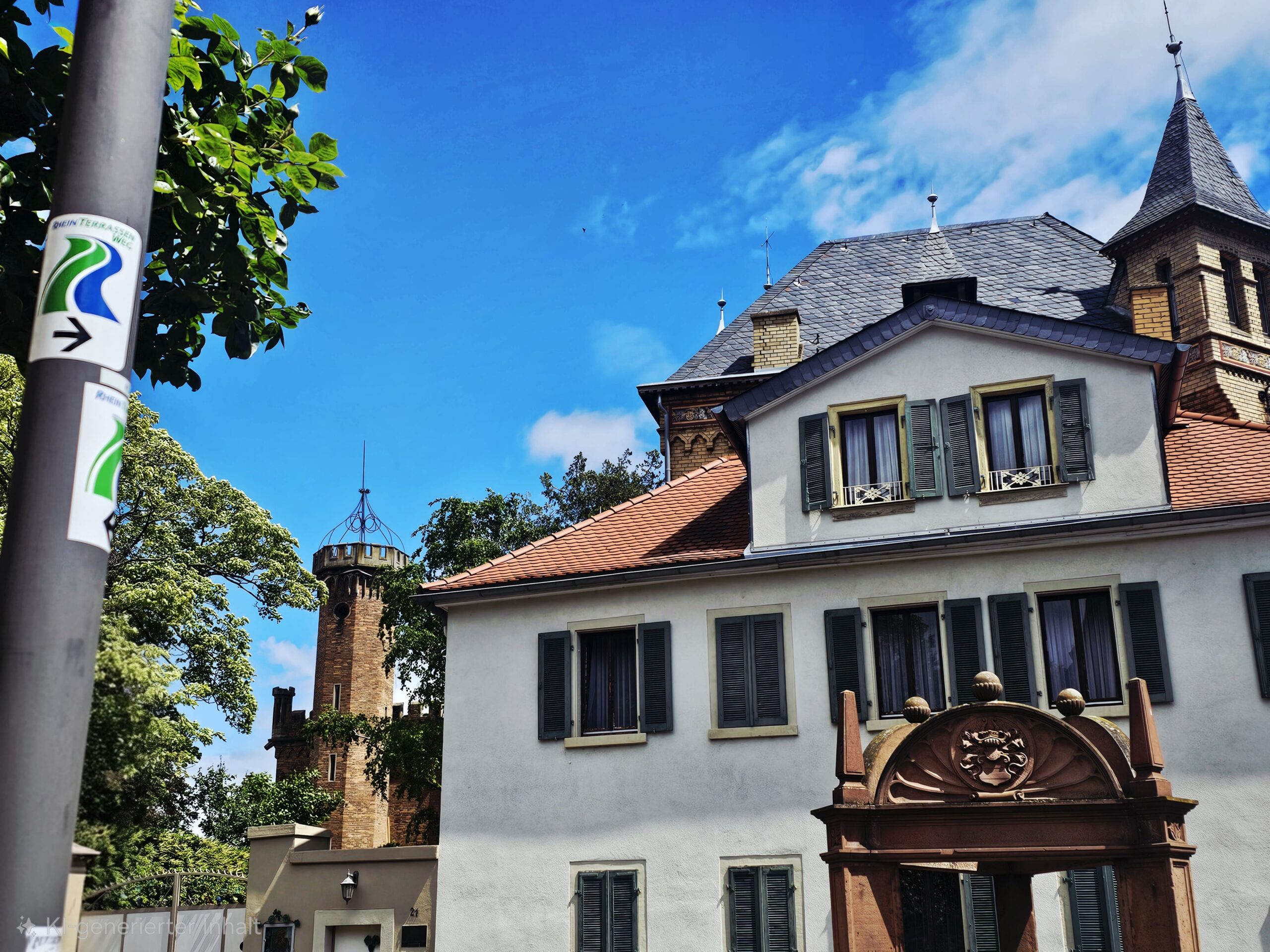
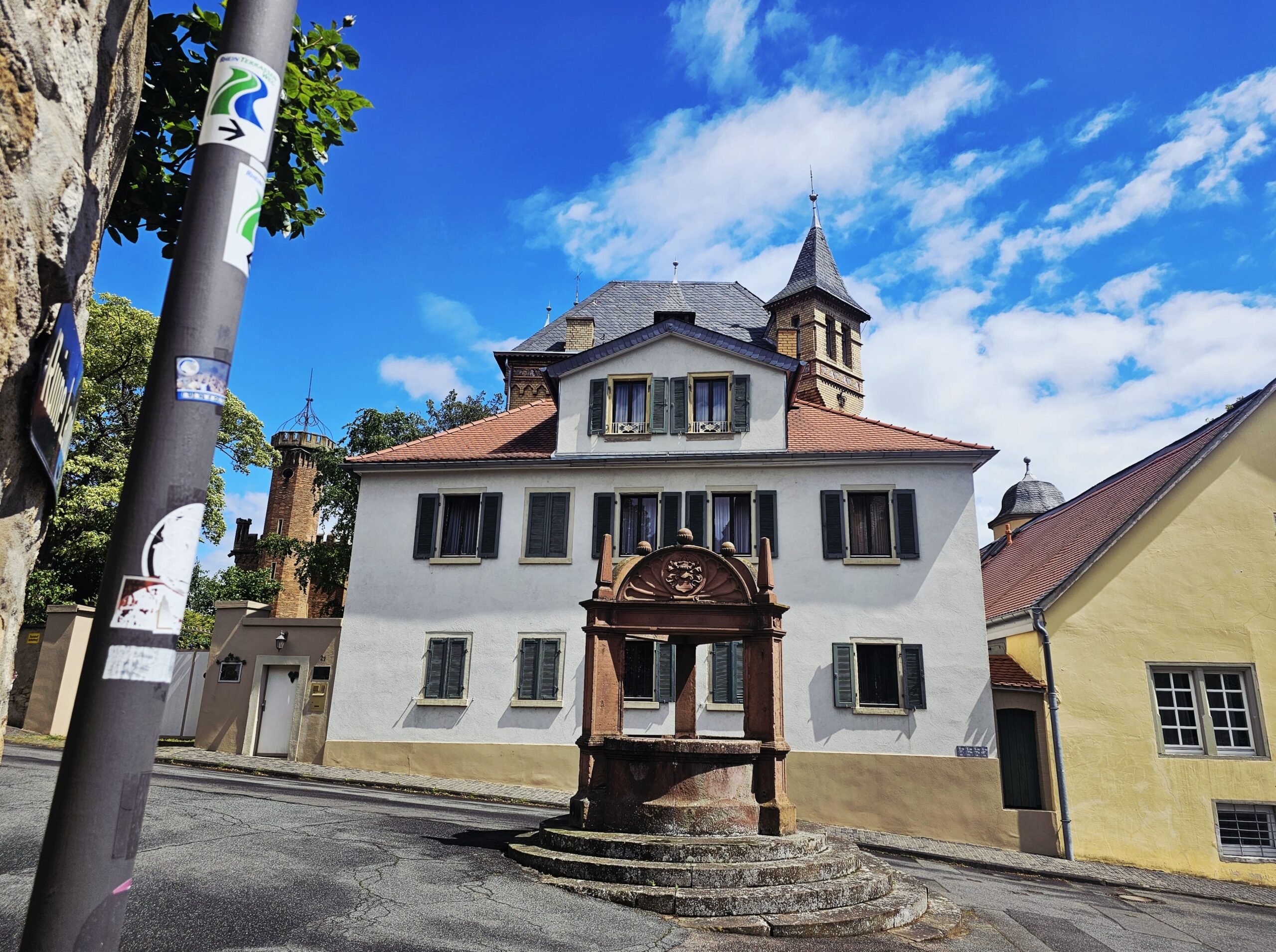
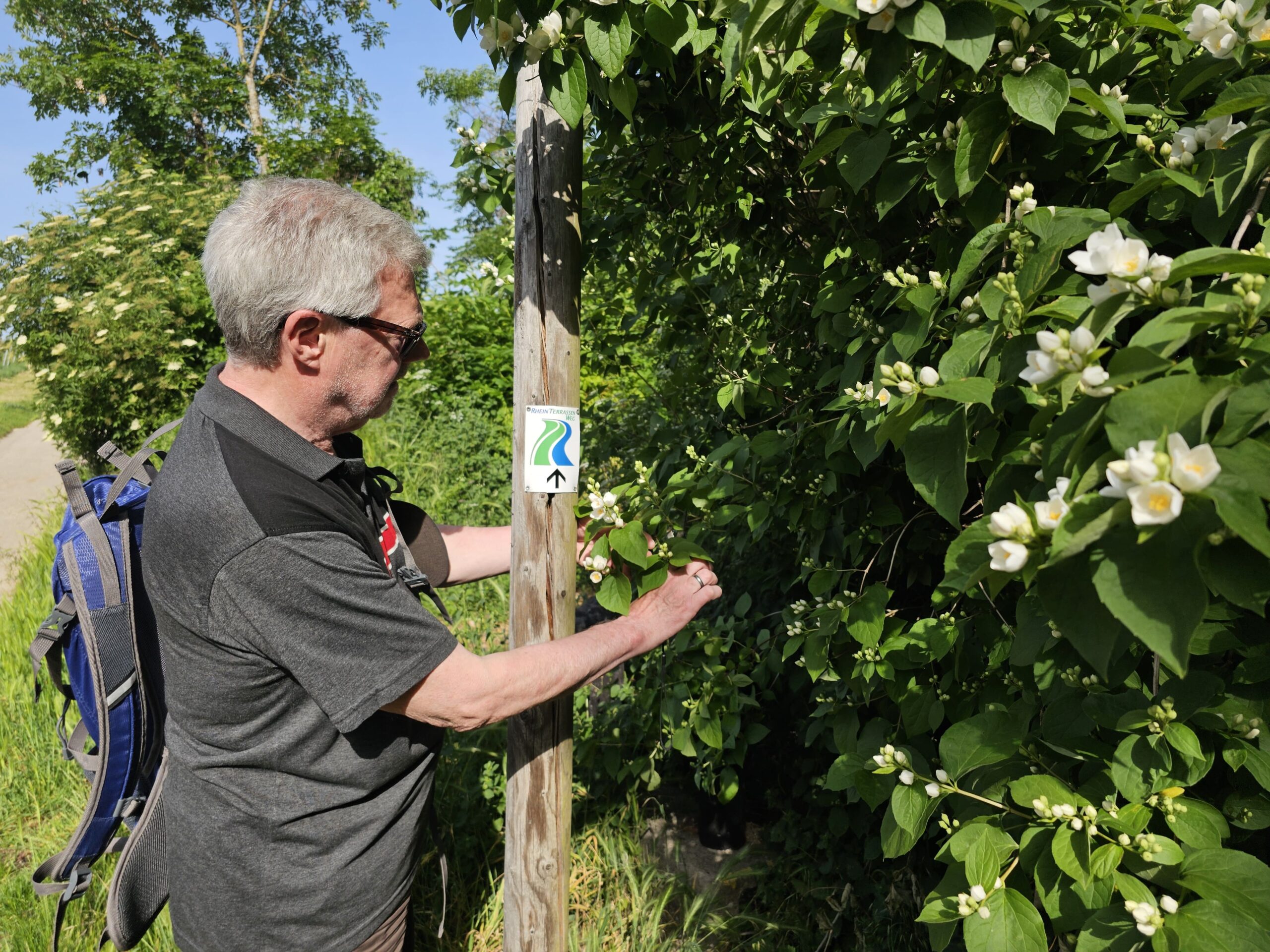
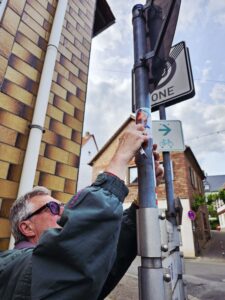
Speaking of posts … Volunteer trail sponsors ensure that these are intact and that the arrows and plaques attached to them point in the right direction. This applies to both the RTW and the Hiwweltouren. Constantly getting lost or searching for the trail isn’t much fun. Good and complete signage helps prevent this. Trail volunteers check: Are the signs and markings (on posts or as plaques, e.g., on lampposts) still in place, correct, clean, and clearly visible? Our goal: The trail should be well-signposted, inviting, and safe for all hikers!
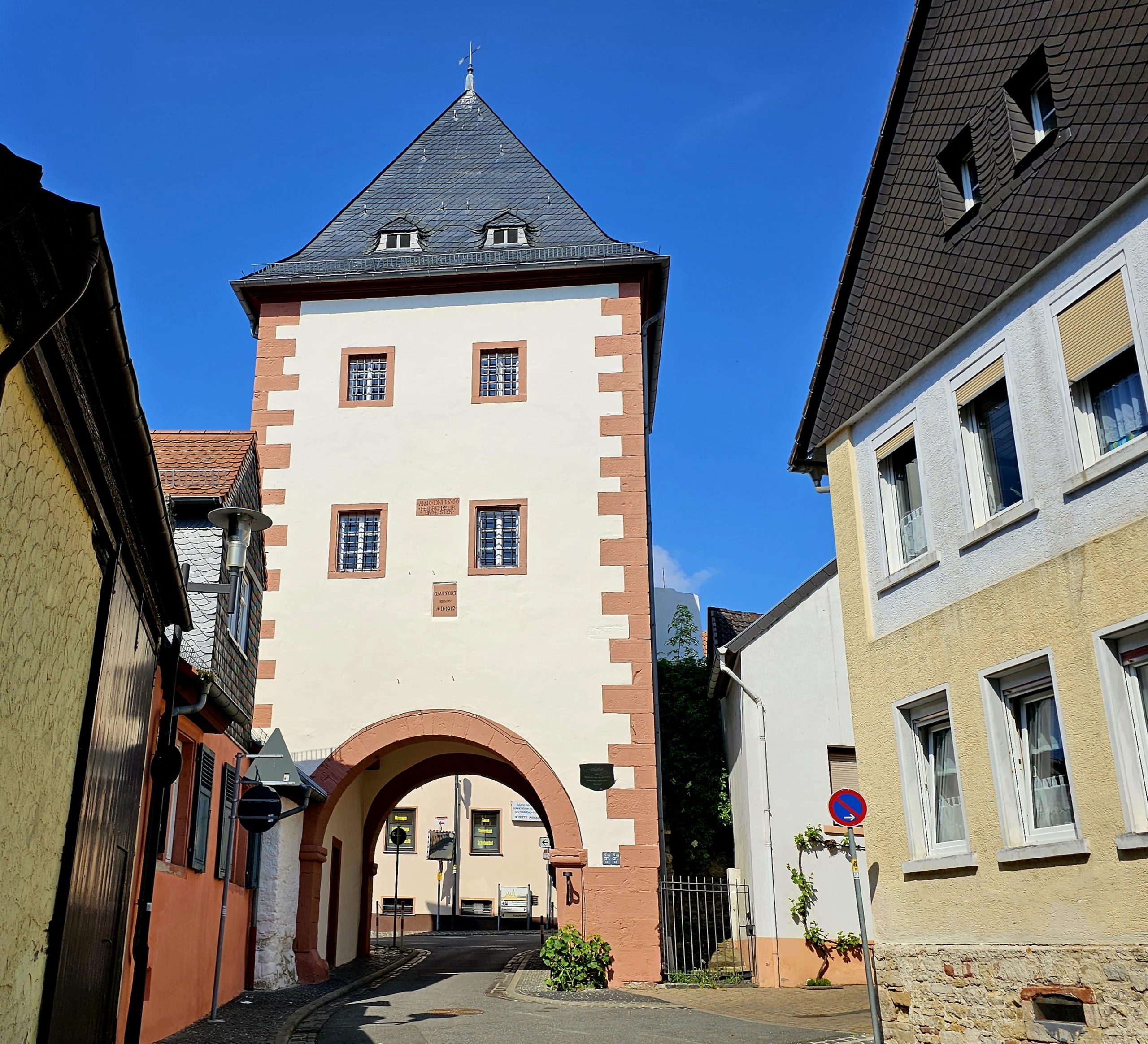
Past the district court and through the Gautor
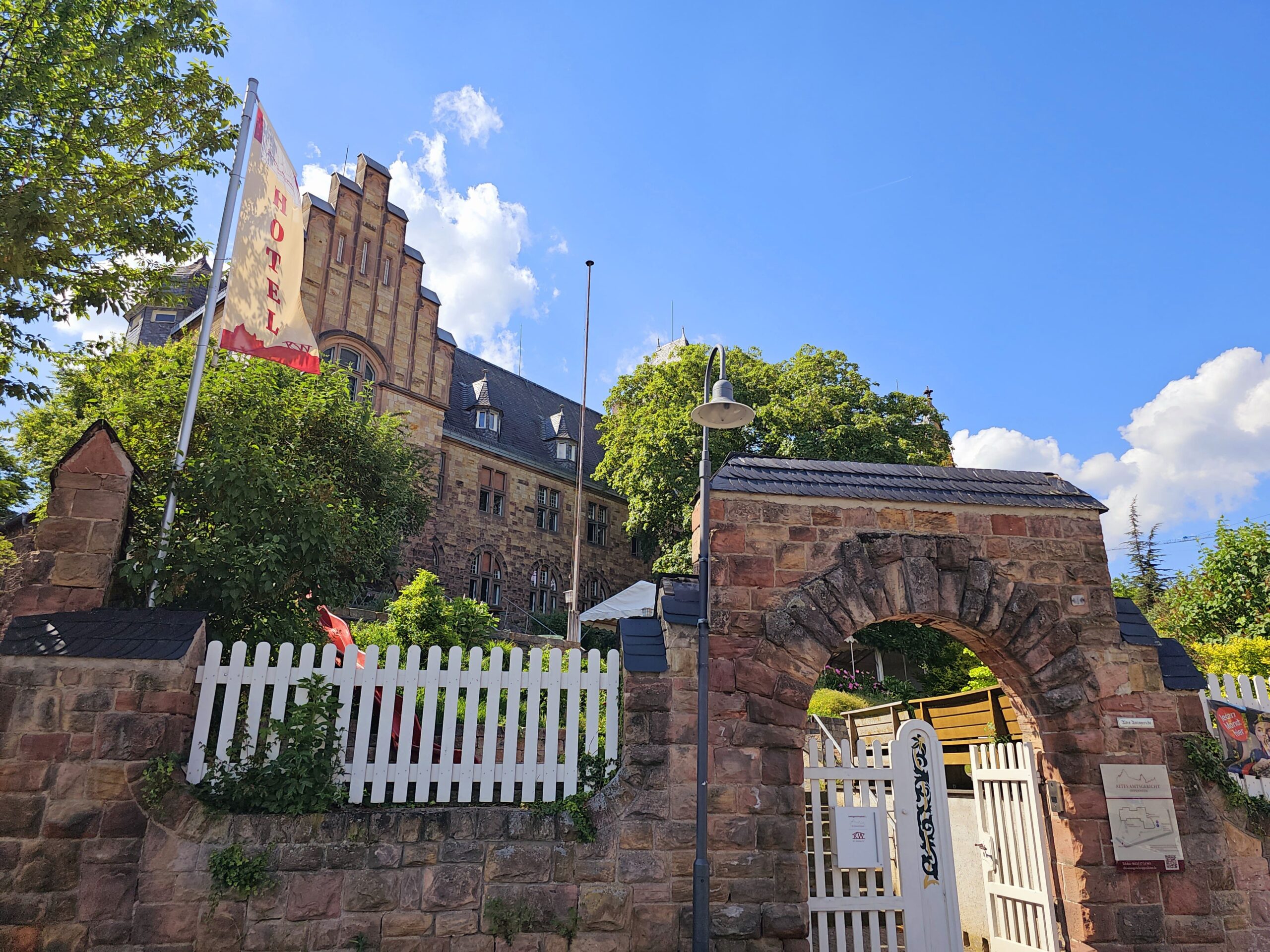
Soon, the Old District Court comes into view. Judgments used to be handed down here; today, this imposing building houses a highly recommended Hotel. Then you'll walk through the square Gautor Gate, one of the few surviving gates in the old city wall. It once served as a prison; today it is used for exhibitions and events.
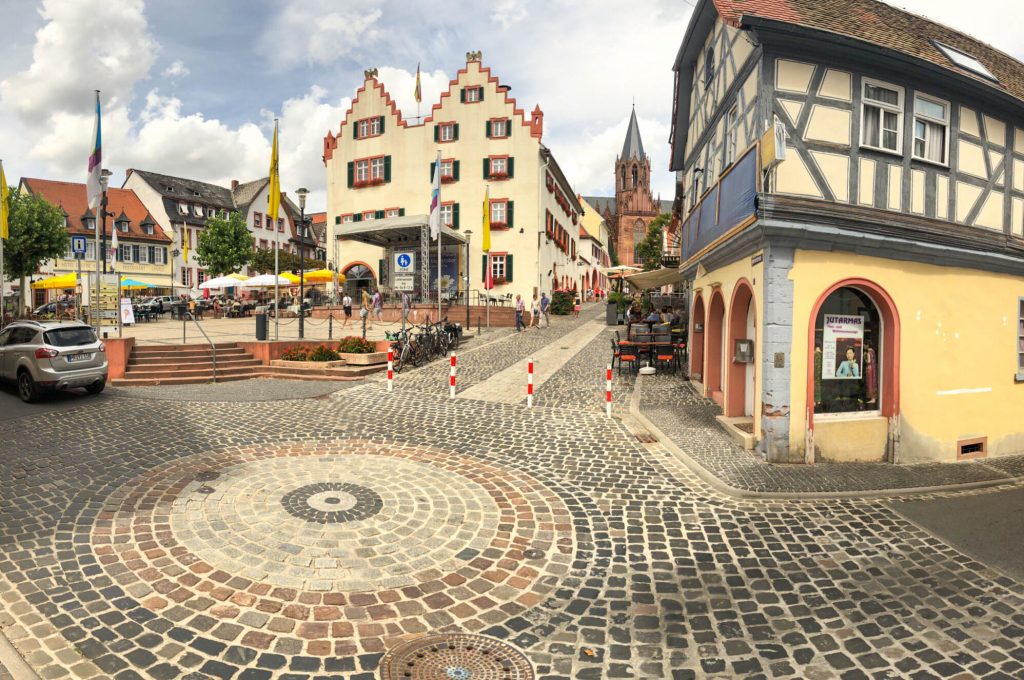
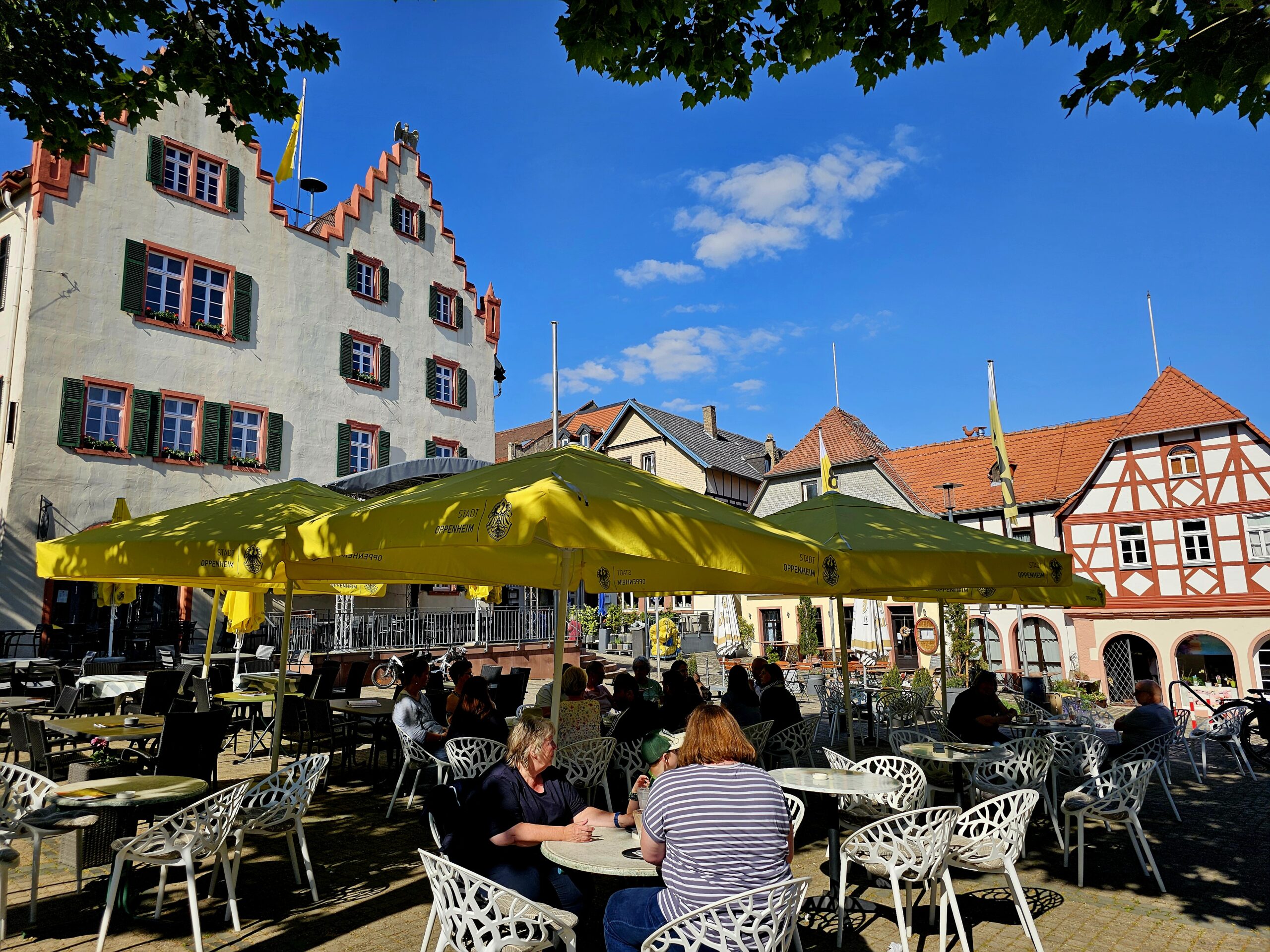
You’ll soon reach the market square with its pretty half-timbered houses. Here, at the heart of the city, things are usually lively and cheerful. There’s a market on Saturdays. Thanks in part to the diverse culinary offerings—including Rheinhessen, Italian, and Indian specialties, tapas, and an ice cream parlor—the square is a popular place to stop and relax. Local winemakers take turns running the bar at City Hall.
Look at the town hall’s facade for these unique features: the metal “Oppenheimer Elle,” which was once used to measure fabrics. And further up: toads! Made of metal, of course. These animals are, so to speak, the town’s mascots; the town is known for its Krötenbrunnen vineyard. You passed the fountain that gave the town its name on the leg of the route from Guntersblum to Oppenheim. There are said to have been many toads there in the past.
The Cellar Labyrinth and St. Catherine's Church are worth a visit
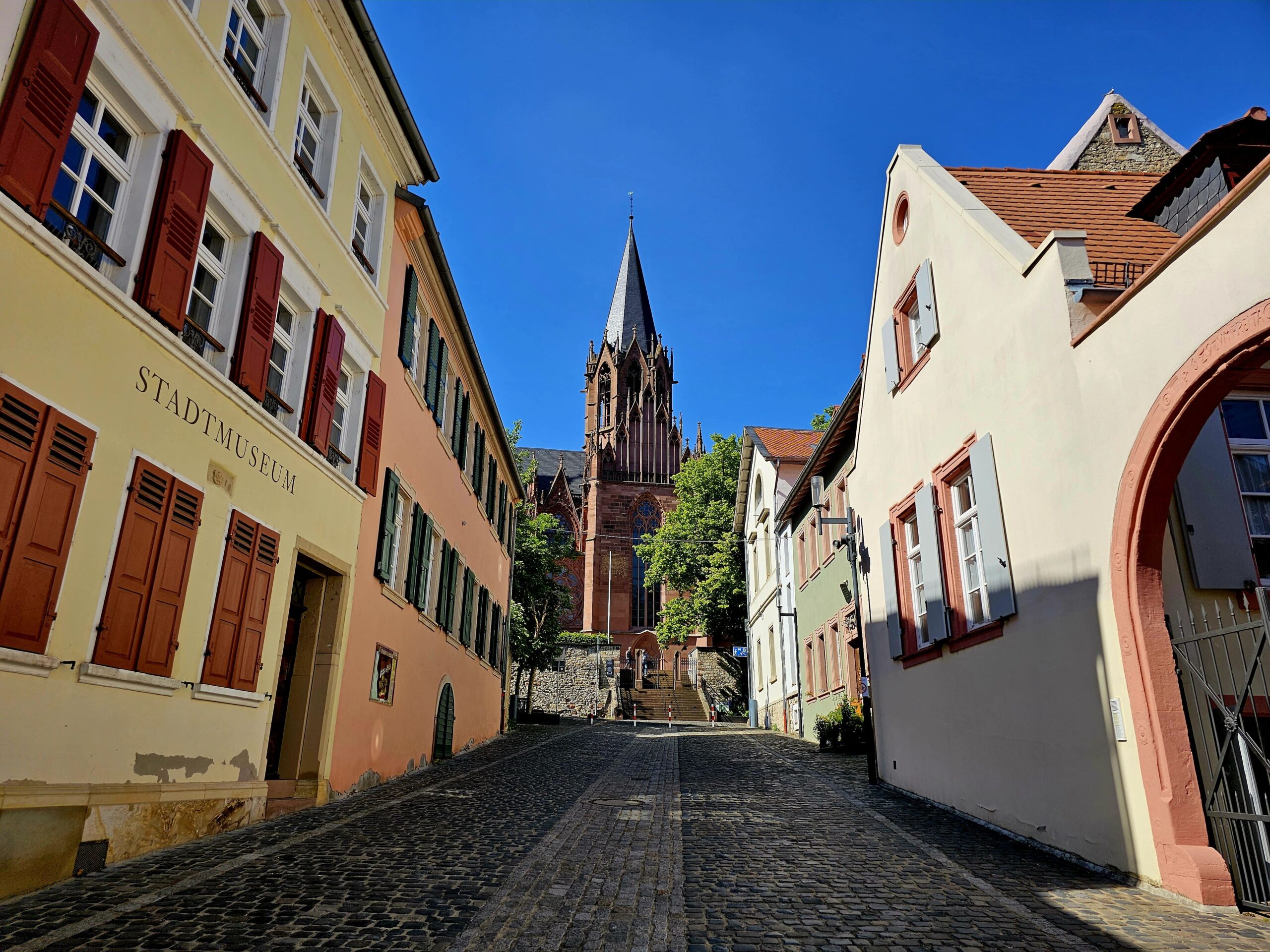
On the way up to the imposing St. Catherine's Church, an information sign reveals what lies hidden underground here: an extensive network of, underground cellar labyrinth up to five stories deep. Tip: There are regular guided tours of the „city beneath the city“ to the „Cemetery of the Chamber Pots“ or the „Skull Splitter“ (tickets online https://www.stadt-oppenheim.de/buchen or at the tourist information office).
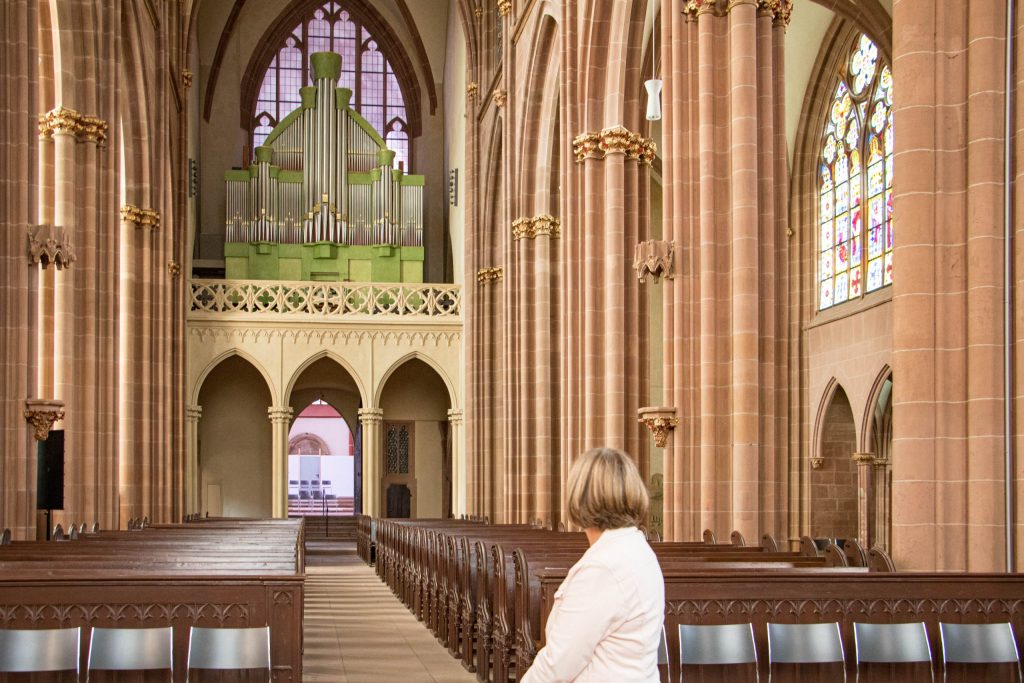
It's also worth stopping by the St. Catherine's Church, The most significant Gothic religious building between Strasbourg Cathedral and Cologne Cathedral. Can you see, from the south side, the heads on the roof that depict a man’s aging process—from youth to old age? And above them, roses in various stages of development, from bud to bloom? Behind the church, which is characterized by various architectural styles—from Romanesque to Late Gothic—lies a true curiosity: the 20,000 skulls in the ossuary, the largest of its kind in Germany.
A little further on, it’s carved in stone that the nobility once lived here: the Family Fountain, featuring the coats of arms of the three noble families—Dalberg, Falkensteiner, and Gemminger. Walking along the street „Am Zuckerberg,“ you’ll pass St. Catherine’s Church again—this time heading north. The name has nothing to do with Facebook 😊; rather, the wine grown on the hillside above is said to have been particularly sweet in the past.
Along the Snake Trail to the Castle Ruins
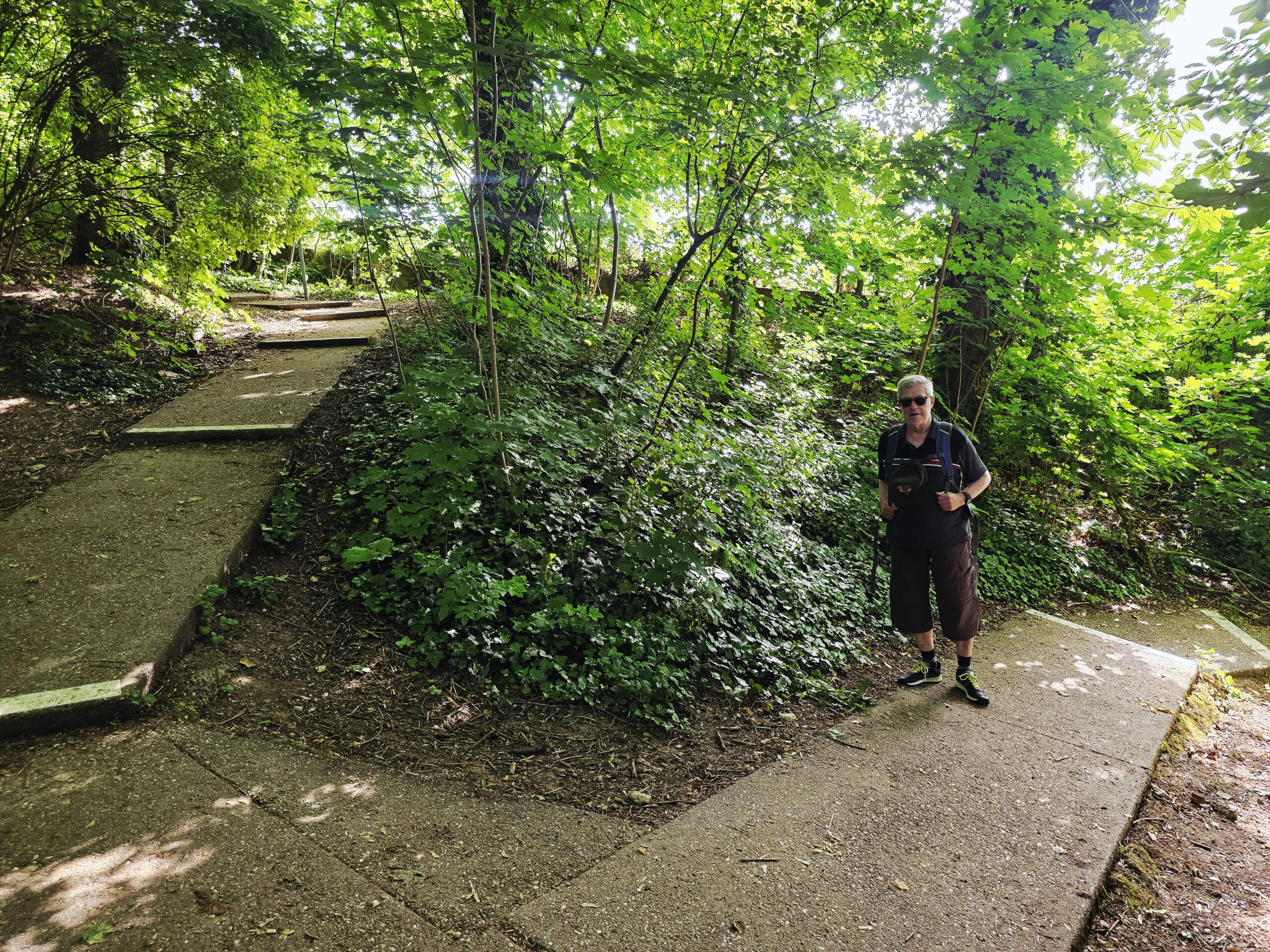
Locals have dubbed the staircase path leading up from Burgstraße to the Landskron castle ruins the „Schlangenweg“ (Snake Path). It’s a fitting name: the switchbacks really do wind like a snake through the small, densely forested grove—giving it a bit of a jungle feel. From the remains of the castle complex, you’re treated to a bird’s-eye view of the city as well as sweeping vistas to the south and all the way to the Odenwald.
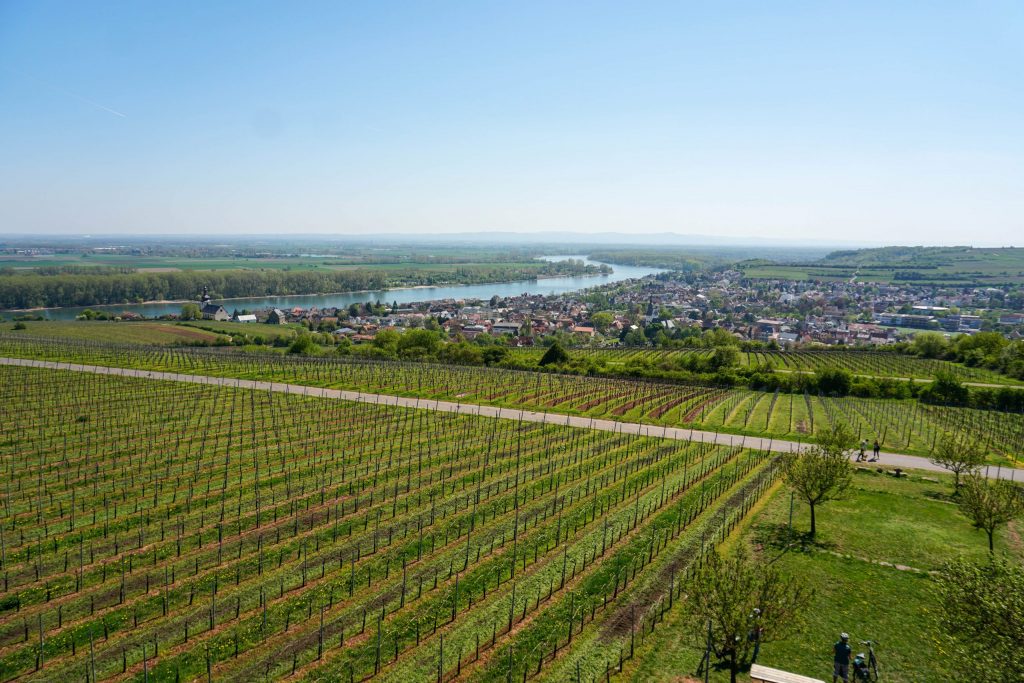
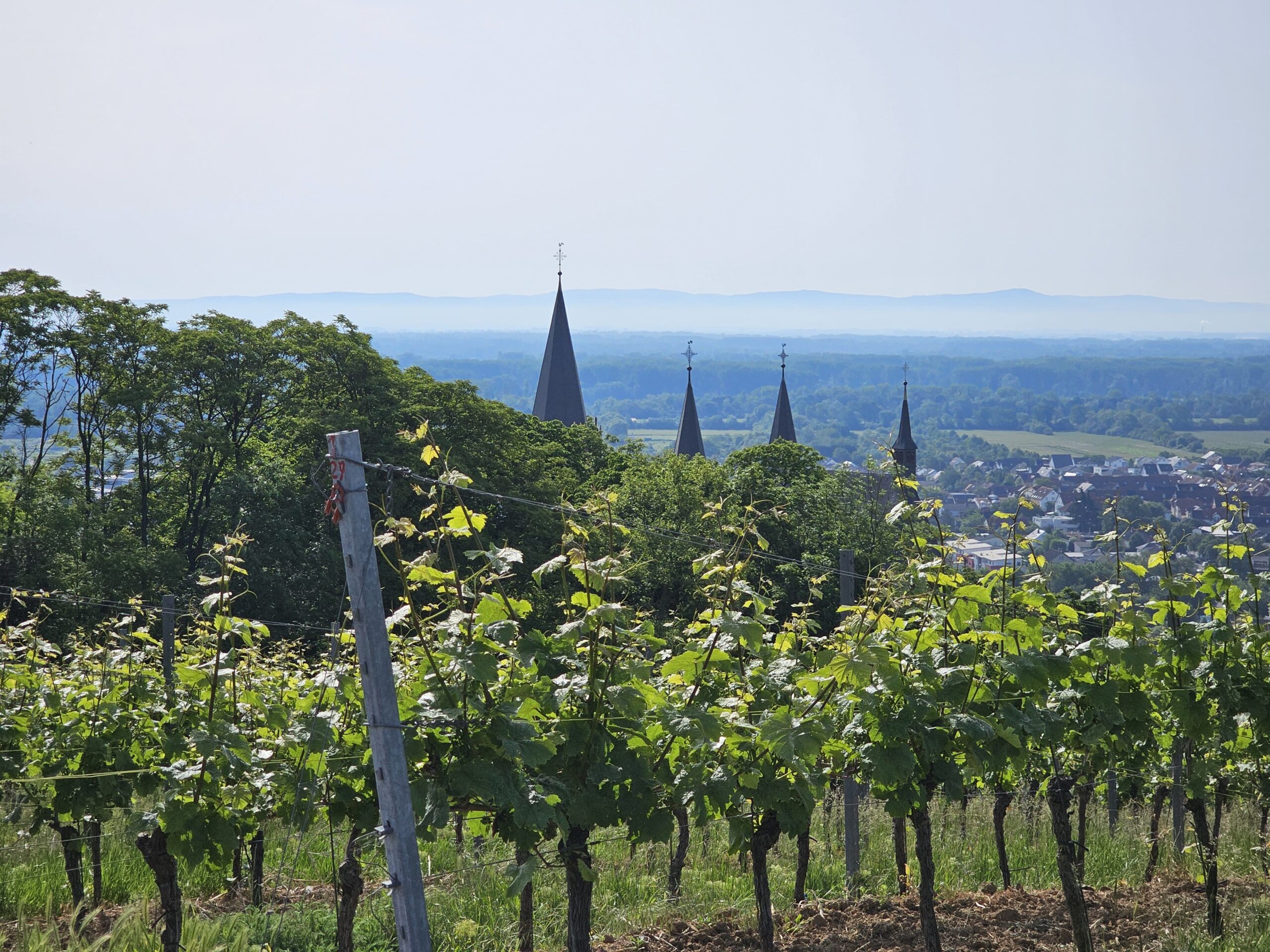
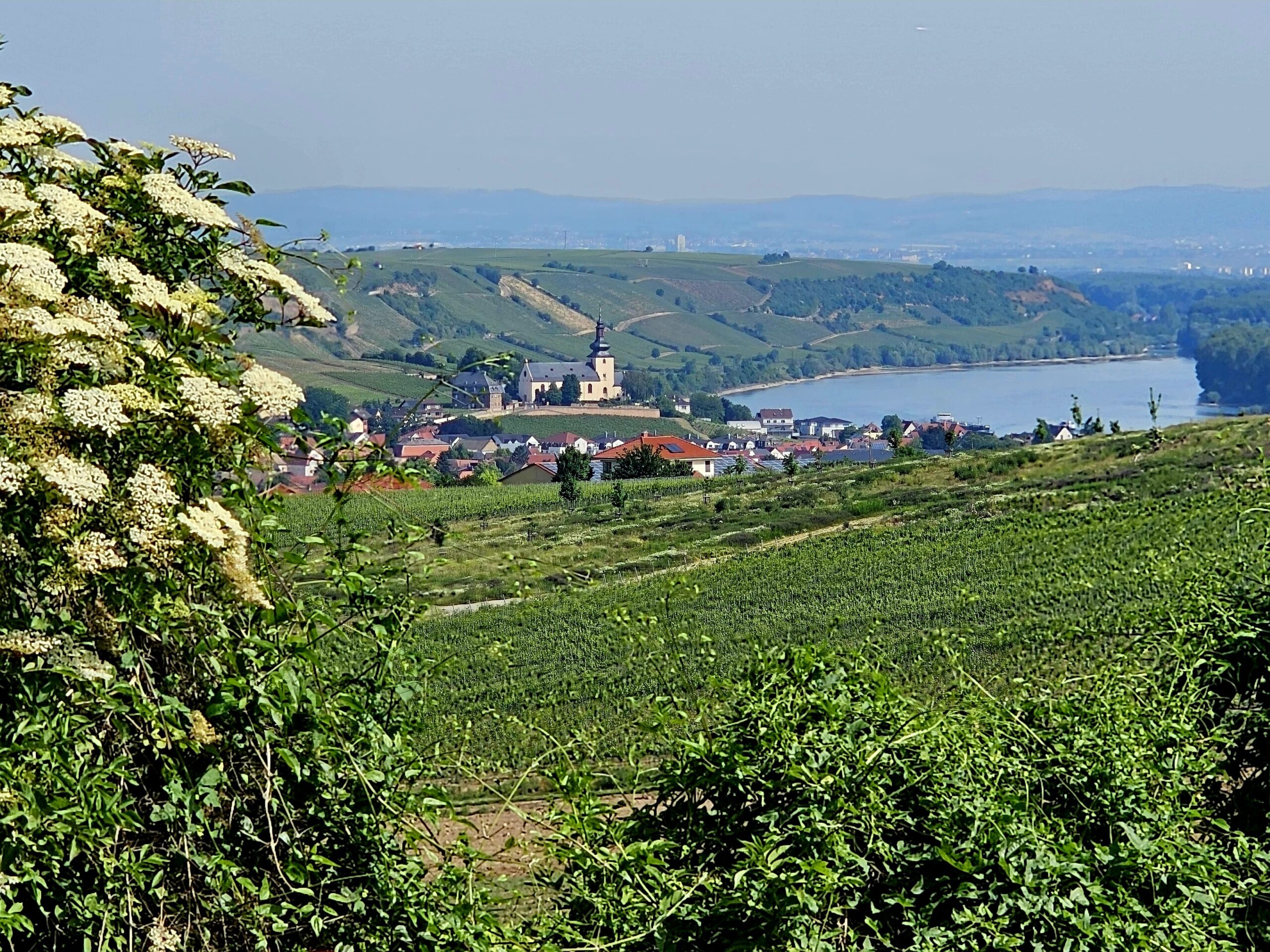
The distant views from the hilltop, where the path now winds through the vineyards, are also a feast for the eyes. At first, the view is toward the south and southeast, toward the Odenwald; soon after, it turns north toward Nierstein. The Rhine is visible in both directions. Time and again—depending on the season—blooming roses adorn the rows of vines. Further along, various trees are trained on trellises—donors funded the plants a few years ago.
New rest areas with benches and lounge chairs
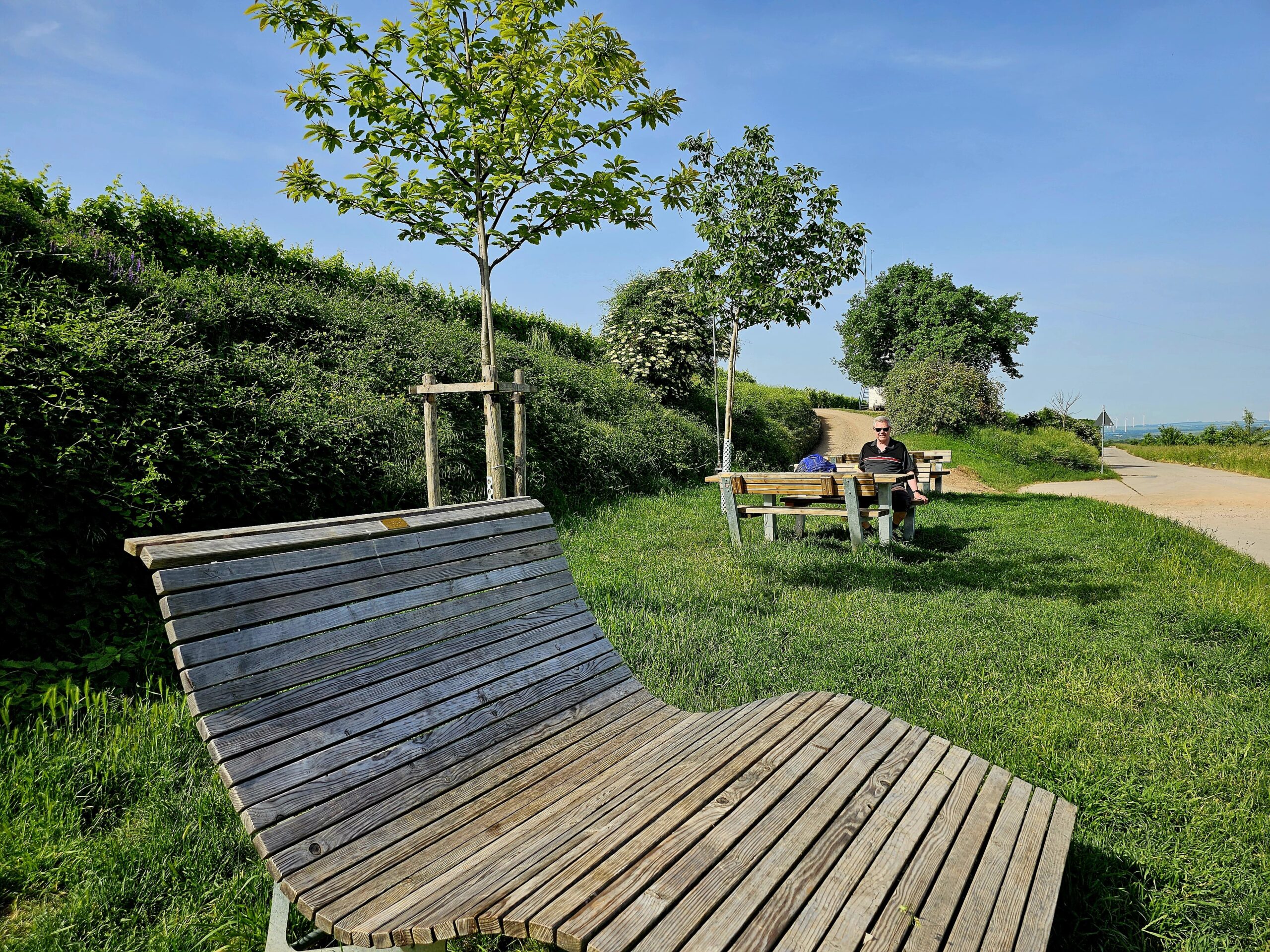
New tables and benches, as well as the lounge chairs typical of Rheinhessen, invite visitors to take a break at the Trutzturm. The tower is partially hidden behind trees. Its antennas and masts reveal that it’s used by local amateur radio operators. There’s a charming story behind the name: A winegrower is said to have built the tower as a vineyard cottage to celebrate the birth of his daughter. However, he is said to have grown an unauthorized grape variety there—out of „defiance toward the authorities,“ as the story goes.
Speaking of rest stops … The trail volunteers also check: What condition are the benches and lounge chairs in? They fix minor damage themselves and report when major repairs are needed. This allows professionals to be called in to handle the work. They also clean signs and trim back overgrown markings. They carry hedge trimmers for this purpose, as well as a bag to collect soda cans, packaging, and other trash.
Panoramic views of the Rhine and colorful flowers
Another rest area has been given a fresh new look: at Hummertal. From the benches and lounge chairs, you’ll have a front-row seat for the panoramic view to the north: Nierstein, dominated by St. Kilian’s Church, and the Rhine to its right lie at your feet. High up on the hill, the watchtower rises, and Mainz can be seen in the distance.
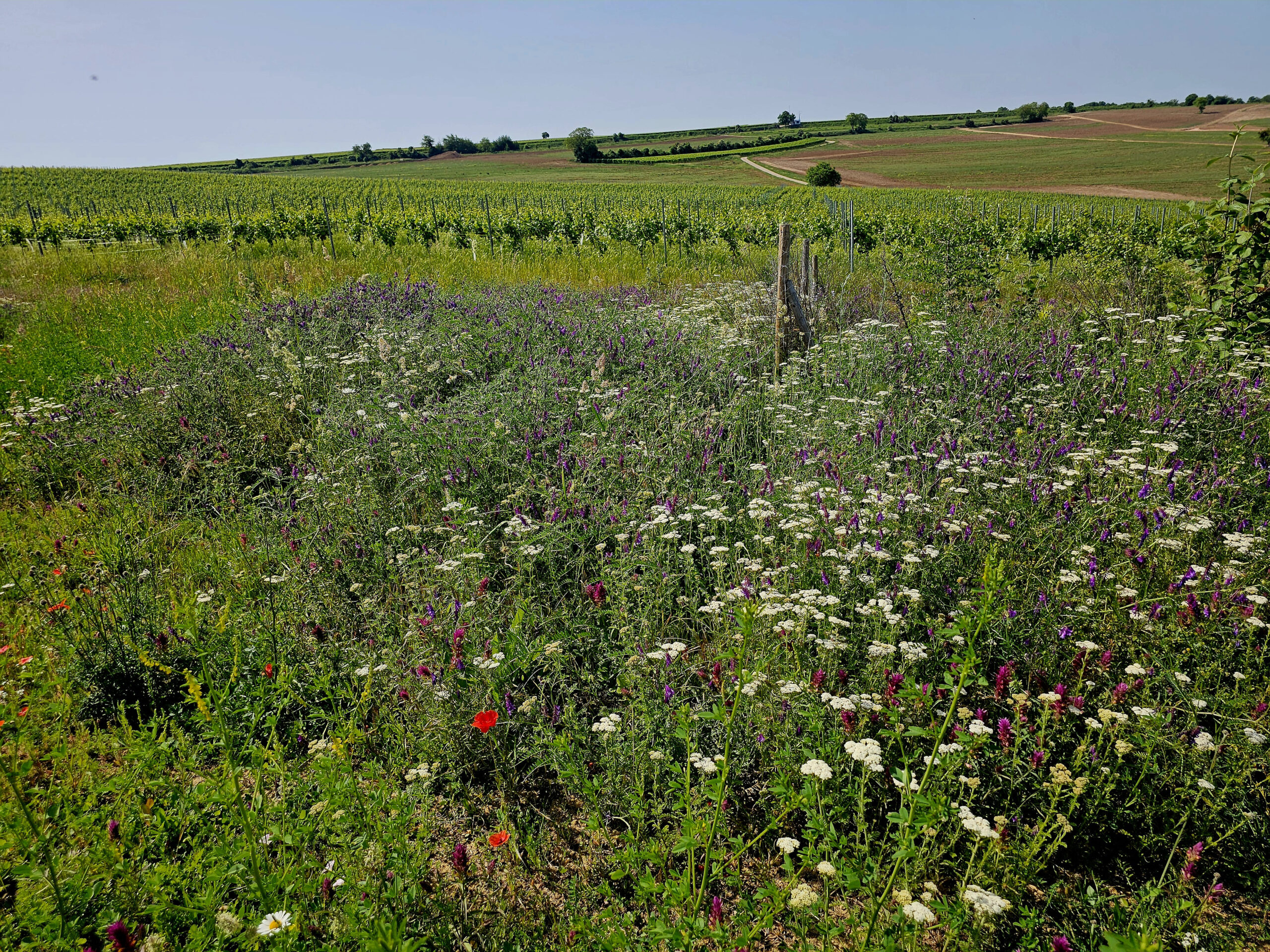
From Hummertal, the trail continues downhill. There are especially many colorful flowers blooming here, which the insects love, too. A “hotel” for them has been set up in the rock gardens along the trail. Fancy a break with some refreshments? Then, just before Nierstein, there’s the Raddeck Winery A place well worth visiting. On the beautiful terrace, the winemakers serve not only wine and non-alcoholic beverages, but also delicacies such as tarte flambée.
Historical Sites in Nierstein and a Wide Range of Culinary Delights
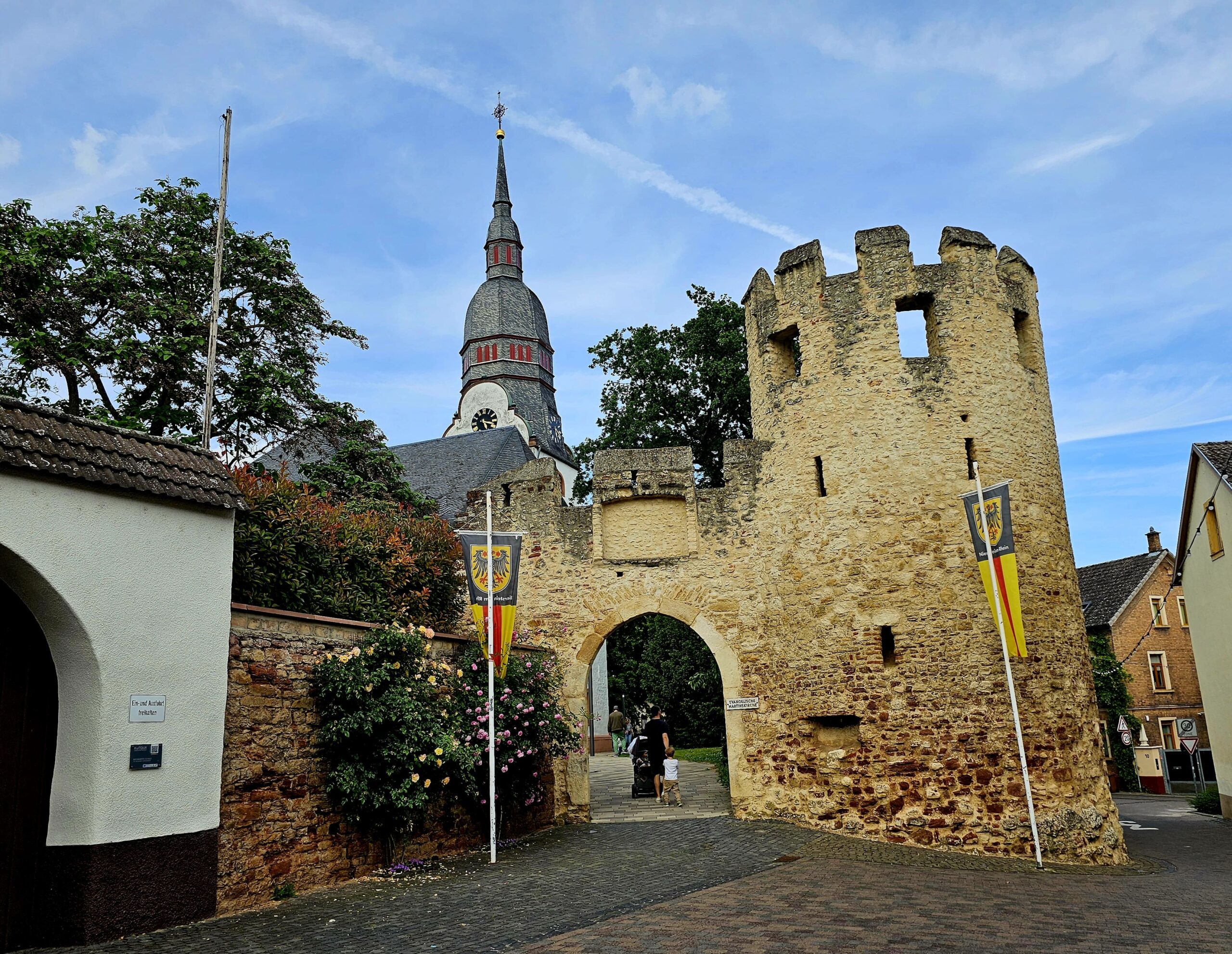
Things get particularly exciting from a cultural perspective again at the end of the stage in Nierstein: Historic residential buildings characterize the idyllic Fronhof. There you’ll find the entrance—a gate set in a massive tower—to the Protestant St. Martin’s Church. The lovingly landscaped garden creates a green oasis right in the heart of town. Part of it is designed as a Bible garden. All of its plants are mentioned in biblical texts, such as figs, cedars, and grapevines.
Continuing on to the charming market square, there’s once again a wide selection of great dining options: a cozy café, wine bars, and restaurants. The culinary offerings range from Rheinhessen specialties to burgers, vegetarian dishes, and Vietnamese cuisine. When the weather is nice, meals are served outdoors. Also worth a visit is the Fossil Museum, whose „time capsules“ take viewers on a journey more than 500 million years into the past every Sunday.
Yellow-marked trails lead to (and from) the train stations in Nierstein and Oppenheim and connect to this main trail. So leave your car behind and travel by train—it’s the eco-friendly way to get there.
Being a trail sponsor is fun—most of the time!
During the checks, which take place twice a year, you can wonderfully combine exercise in beautiful natural surroundings with a meaningful task. You’ll find that you start looking even more closely and notice things you probably would have walked right past without a second thought in the past. The task is fun! The only annoying thing is when strangers stick stickers—which are hard to remove—over the RTW markings, covering them up for no good reason. If you see people „wildly sticking“ stickers, please speak up!
The RheinTerrassenWeg trail between Mainz and Worms is divided into eight sections for trail sponsorships. „We’re always happy when people help us maintain the trail. We’re still looking for dedicated trail sponsors, especially for the Osthofen-Mettenheim section,“ says Karin Kieltsch of the Rhein-Selz Tourism Service Center.
Contact: RheinTerrassenWeg Project Office, c/o Rhein-Selz Municipal Association Administration, Tourism Service Center (TSC) Rhein-Selz, Alsheimer Straße 29, 67583 Guntersblum, Email: tourismus@vg-rhein-selz.de, www.tourismus-rhein-selz.de