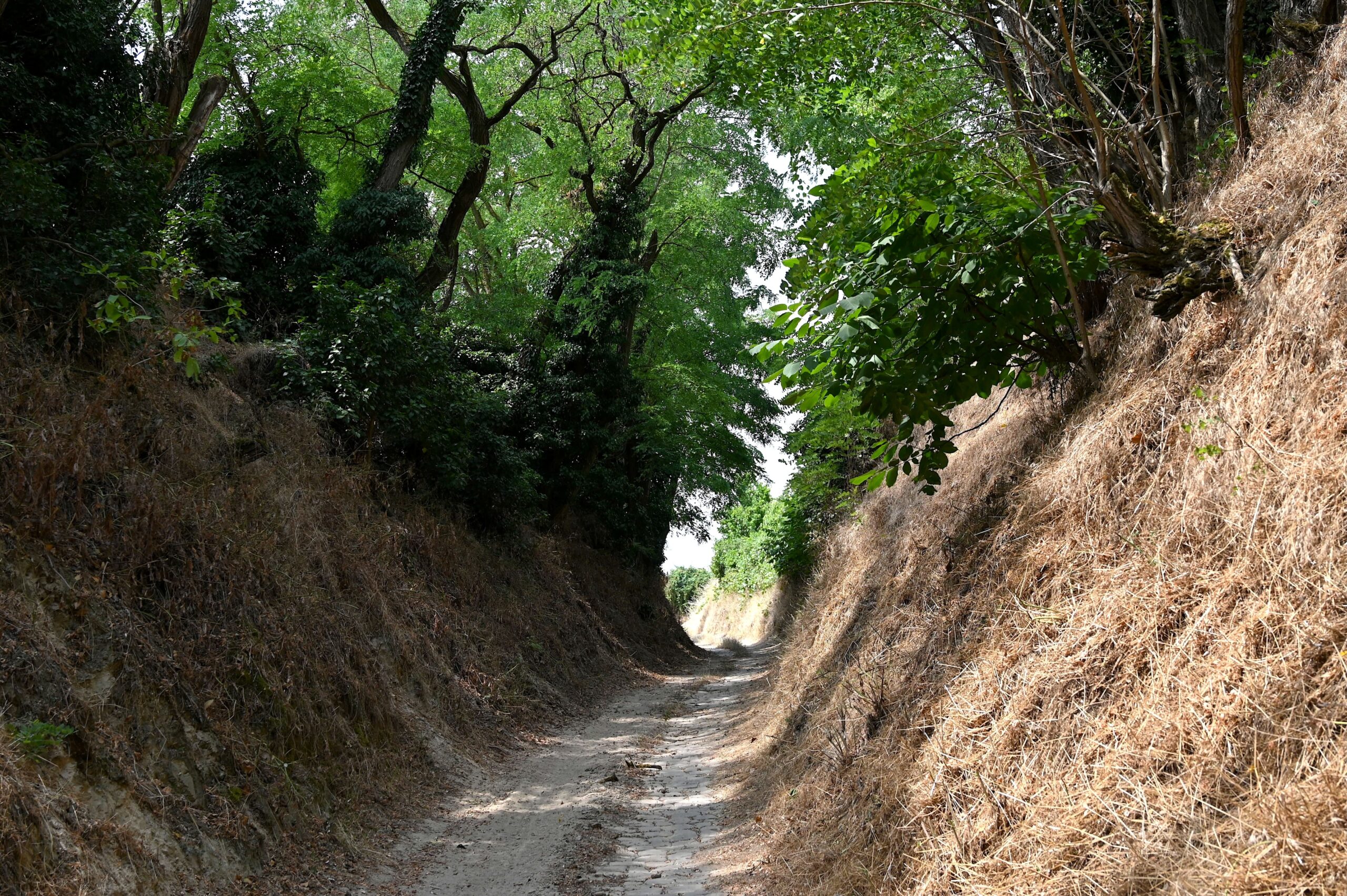
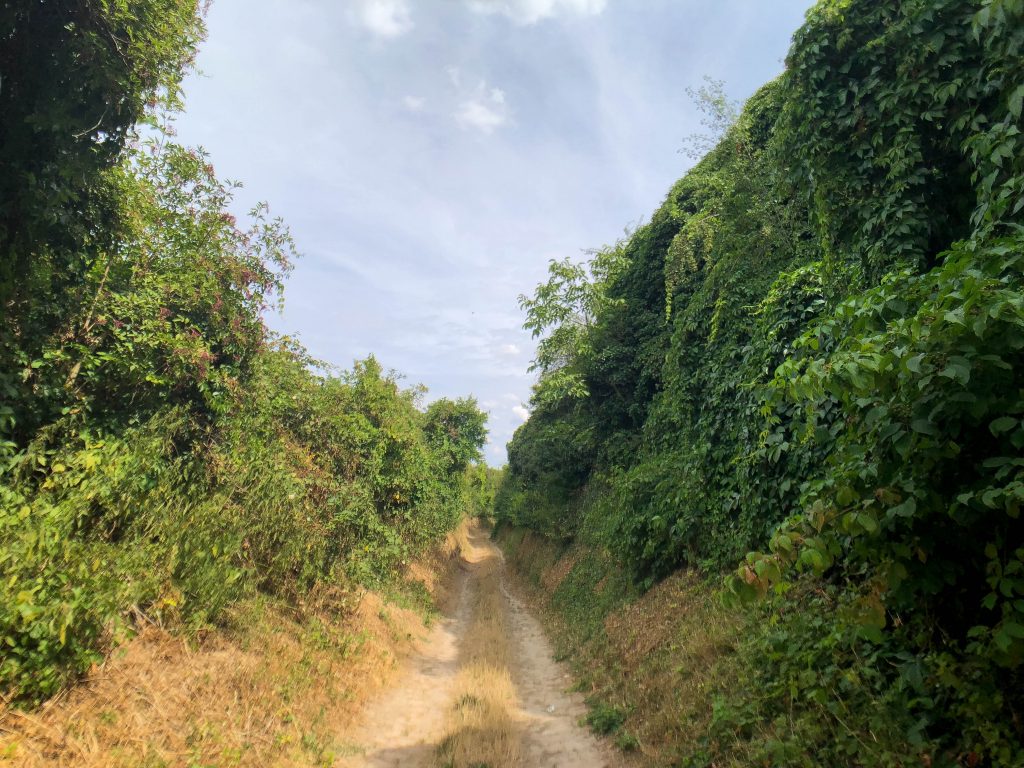
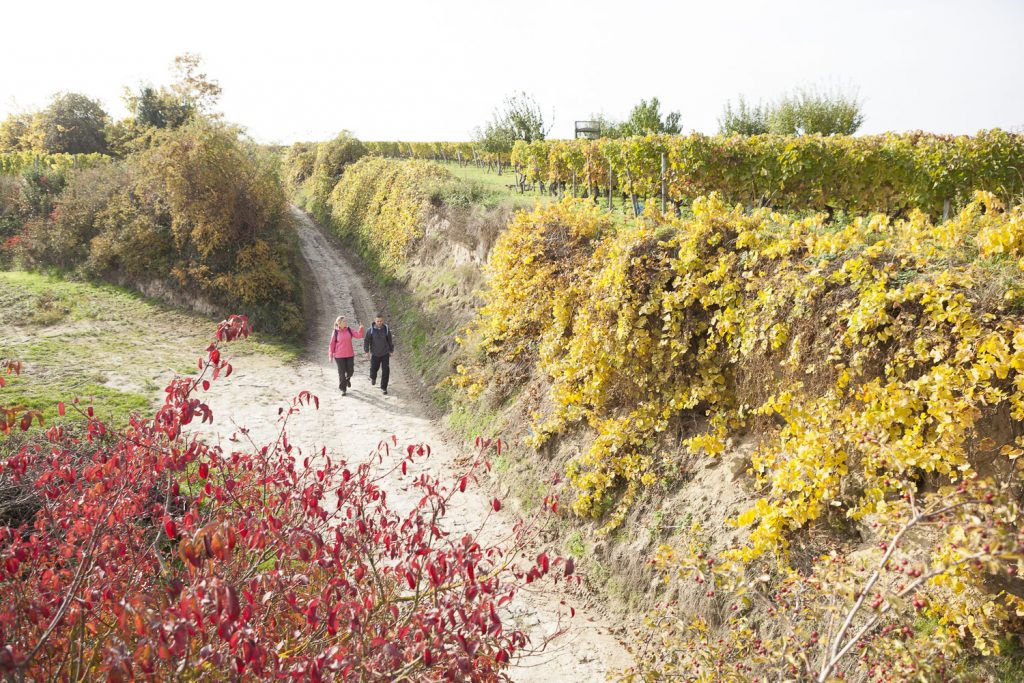
Loess cliffs up to twelve meters high make the sunken paths a unique geological natural monument in Rheinhessen
The Alsheimer Sunken Paths Hiking Tour offers a special experience of nature, winding through the municipality’s unique sunken paths with their rare flora and fauna. The motto is „Wine. Wind. Silence,“ as you hike through the bountiful vineyards of Rheinhessen, across flat and open stretches with scenic views, and through the quiet, shady sunken paths. The certified “Prädikat” hiking trail opened in May 2026; it is 14 kilometers long, and you should plan on spending about 3.5 hours on the hike
Along towering loess cliffs through quiet sunken paths
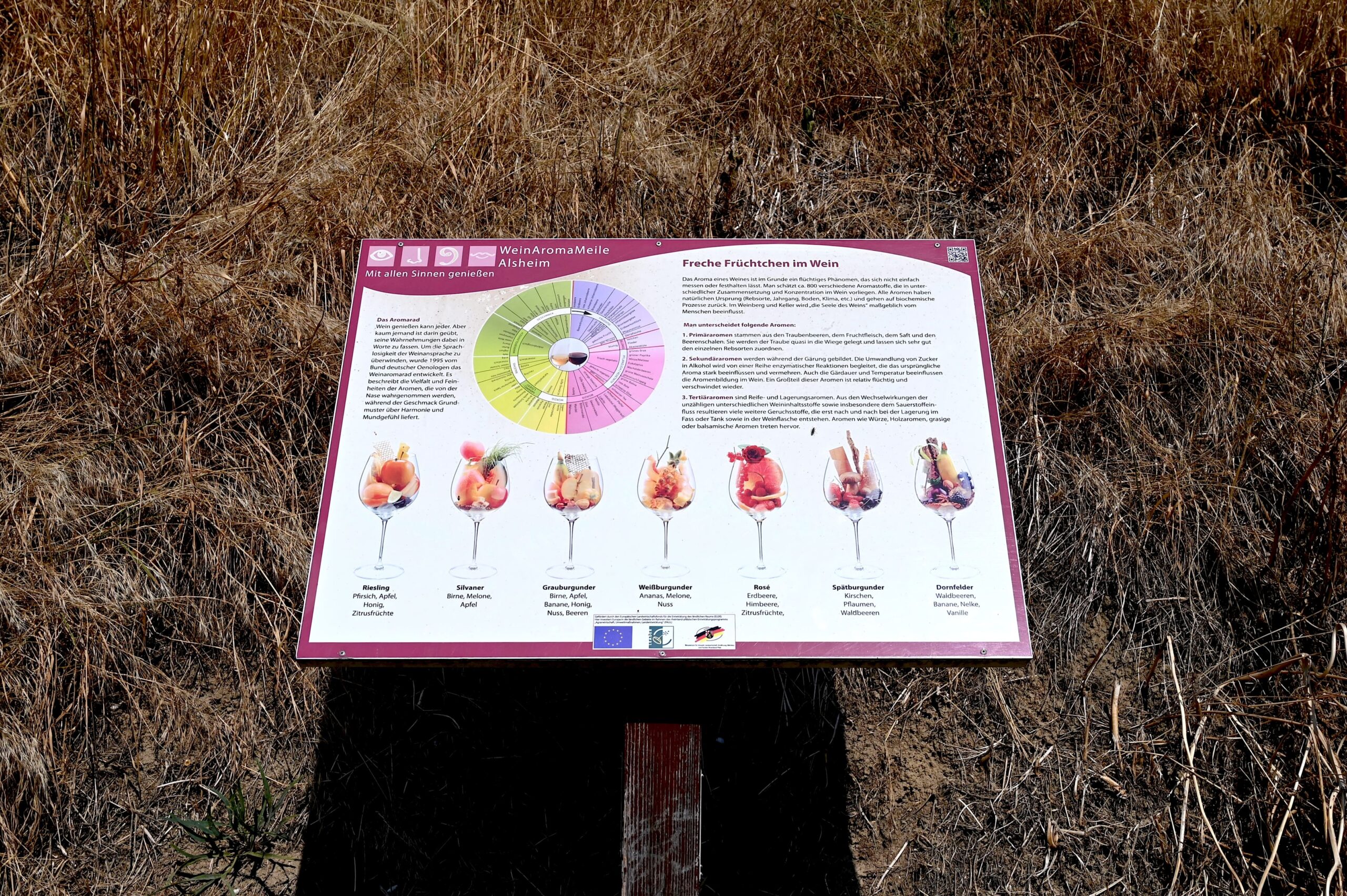
I set out from the community center in Alsheim with Sigrid Krebs, a cultural and wine ambassador as well as a nature educator, and we hike north into the vineyards. A sign by the side of the path points to the „WeinAromaMeile“ educational trail, where well-known Rheinhessen grape varieties are each paired with different fruit aromas.
Information sign about wine aromas along the Hiwweltour Alsheimer Hohlwege trail
During our tour, we'll also be walking on some of the well-known long-distance hiking trails RheinTerrassenWeg and 1521 Lutherweg routes that also pass through the town of Alsheim.
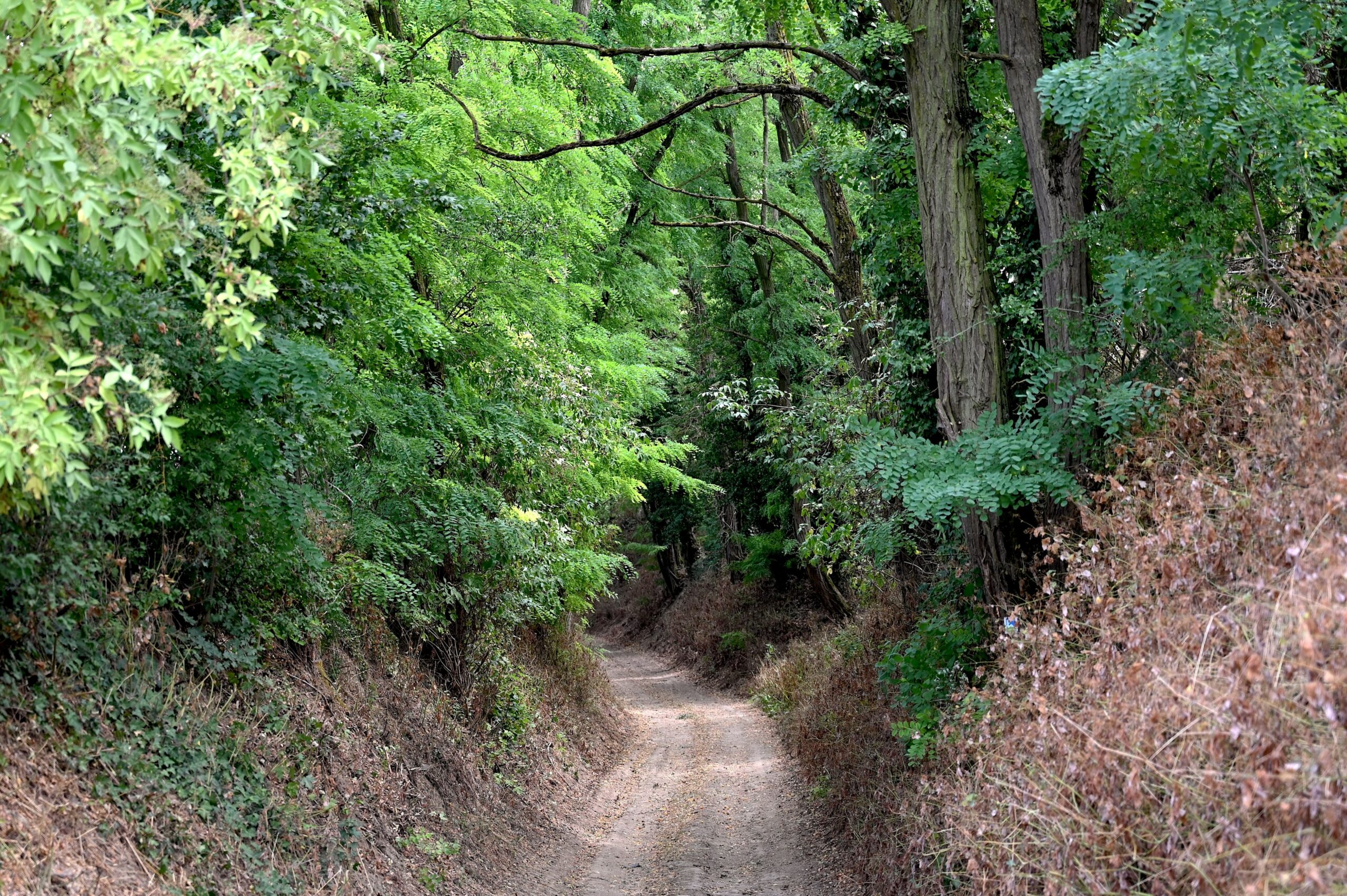
Before long, we'll reach Krummsteighohl, the first of a total of five Sunken Paths on this hilltop hike. The loess cliffs here are up to 12 meters high. They serve as important habitats for wild bees (which make their homes in the holes in the loess cliffs), insects, butterflies, and numerous plant species such as the steppe cherry. It is especially in the sunken paths that hikers gain a good insight into the impressive biodiversity around Alsheim.
Views and Panoramic Views at the "Wine Table"
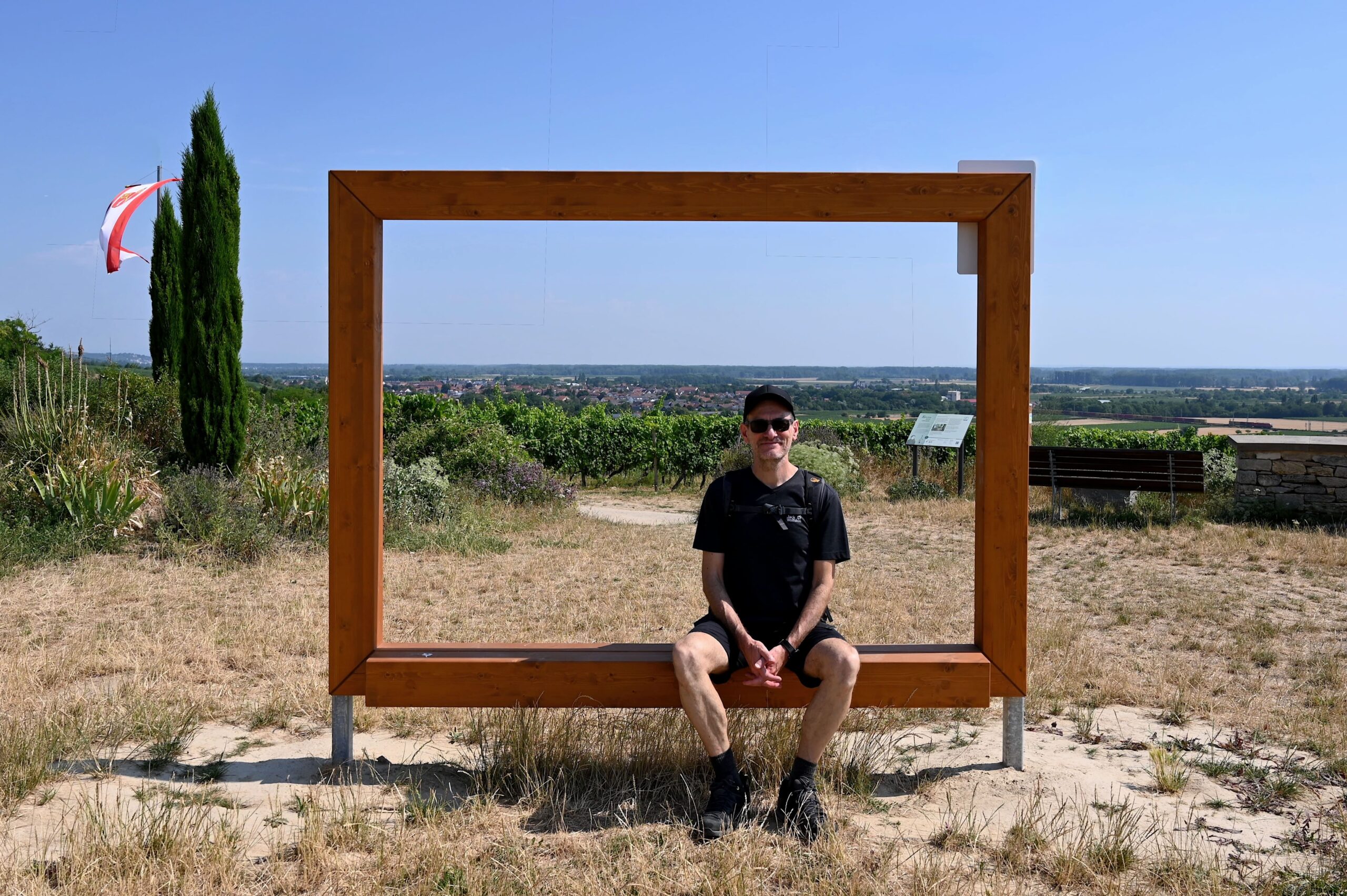
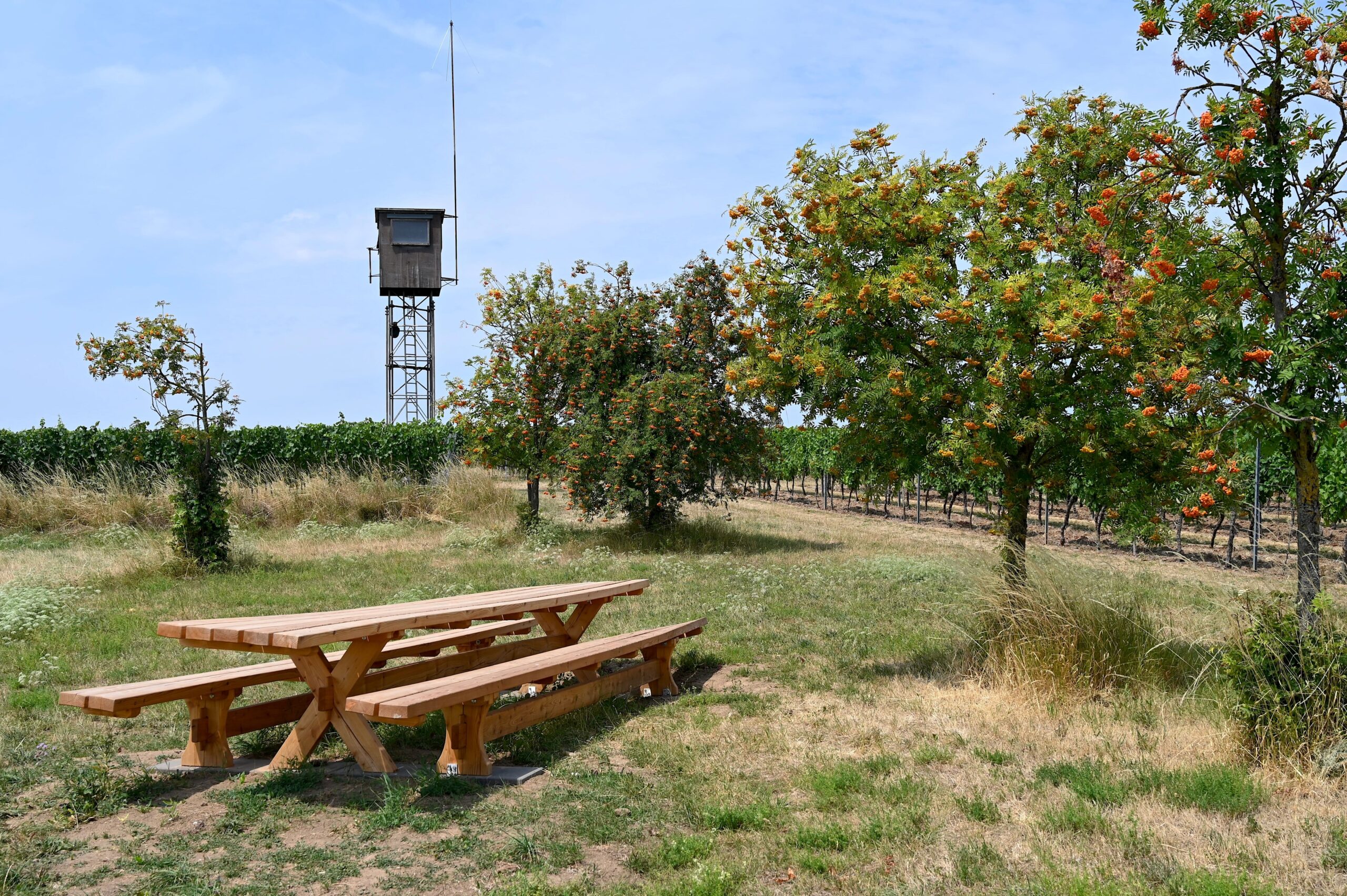
From Krummsteighohl, the trail leads past Helmut-Storf-Platz (with benches) and the middle Rhine terrace to the „Tisch des Weines.“ From there, you have a beautiful view of the Rhine Valley. There are also places to sit, a reclining bench, and a photo frame for snapshots with the view. We take a break to have a drink and enjoy the distant view before continuing our hike, during which we spot more insects and a few striped bugs.
Viewing platform with a picture frame
Sickle carrots (steppe roller) are native to this area, as are field milkwort, German elecampane, yarrow, and wild oregano. Dyer’s chamomile, Alsatian hairgrass, and compass lettuce can also be found here. The loess is a steppe soil, and the climate is hot and dry. As a result, steppe plants thrive here particularly well. They have become just as native to this area as the animals that thrive in dry conditions. You can spot, for example, the antlion’s pit and the larva of the ant-lion—a rare but typical insect found in the sunken paths.
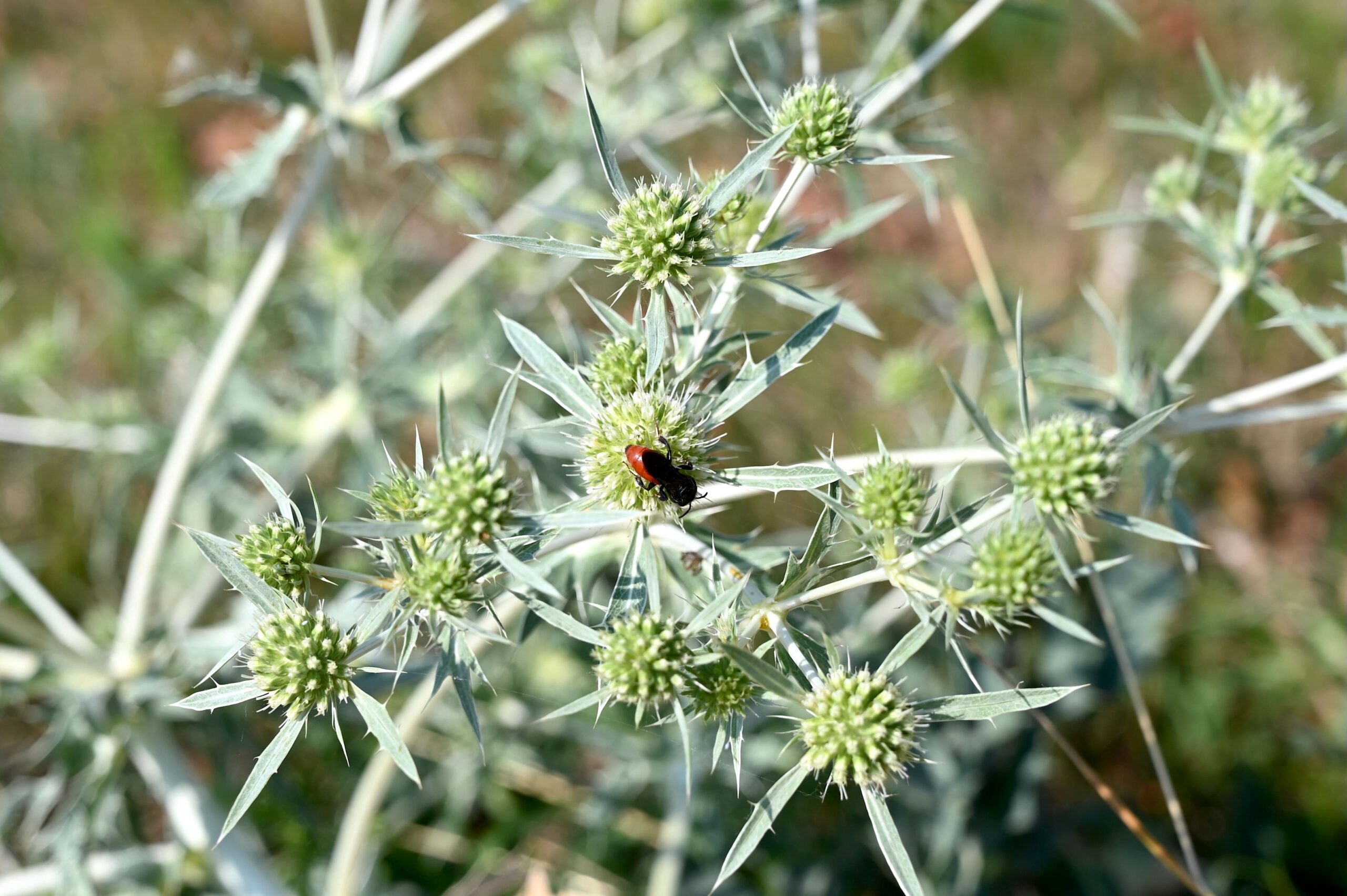
A blooming thistle by the side of the road
Enchanting church ruins and sweeping views of Rheinhessen
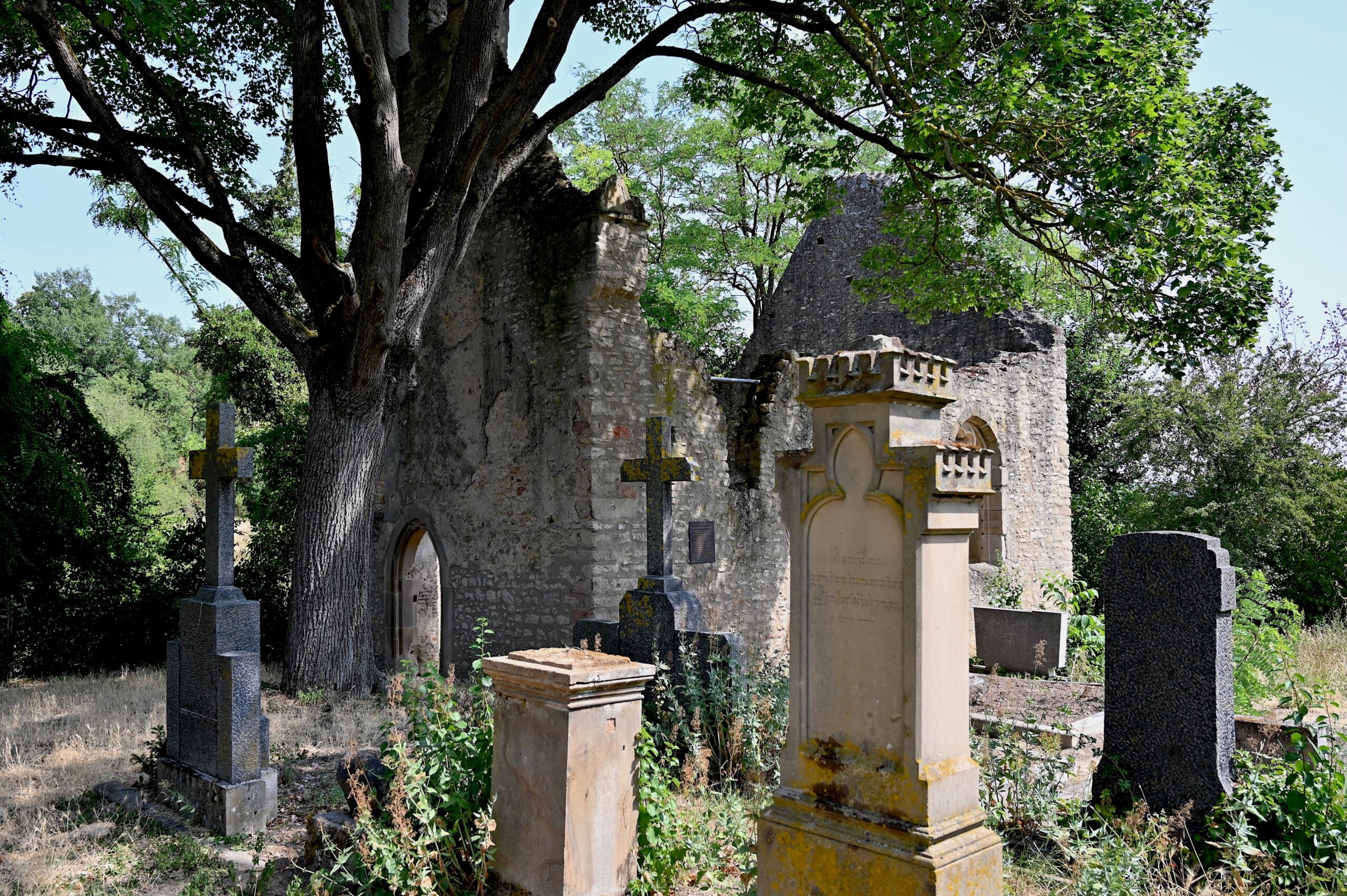
A short while later, in the hamlet of Hangen-Wahlheim, we come to a sign pointing out a detour: the Church ruins of St. Mary Magdalene with its small cemetery. The parish church, with its distinctive tracery windows, dates back to the 13th century; this hidden spot has a magical quality and, at the same time, exudes an incredible sense of peace. After a moment of silence, we walk to the enchanting Art Nouveau water house, built in 1906.
The ruins of St. Mary Magdalene Church with the ruins of St. Mary Magdalene Church and the historic cemetery
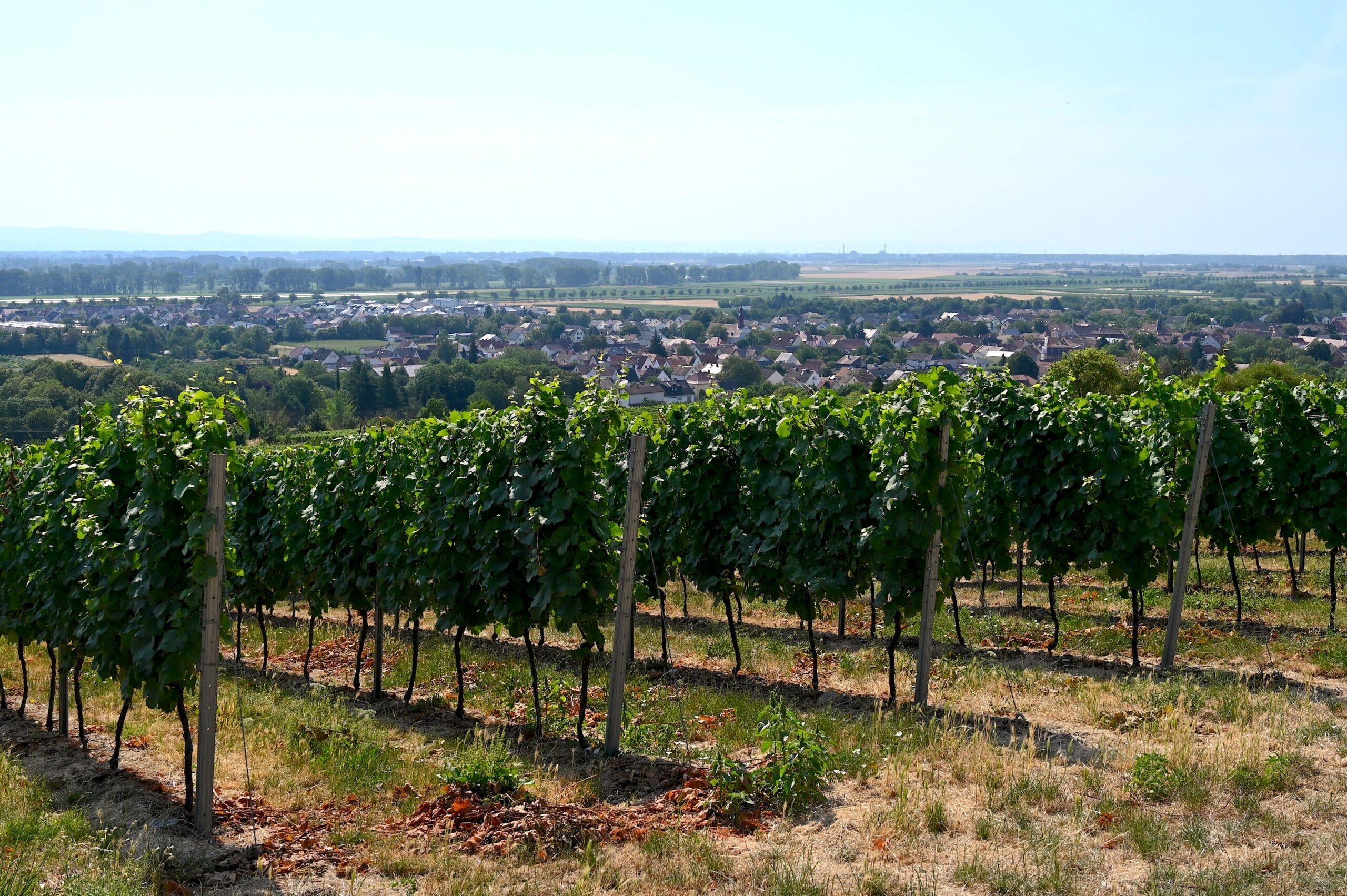
From there, the Hiwweltour leads through expansive fields with wonderful views all the way to the Taunus and the Odenwald. On a clear day, you can even make out the cities of Worms, Ludwigshafen, and Mannheim in the distance. On this stretch, a pleasant, cooling breeze blows on hot summer days (we’re hiking in mid-July). Passing through the shady Münzelhohl, we finally arrive back at the community center in Alsheim. This is where the northern part of the tour ends.
Vineyards with sweeping views all the way to the Taunus and Odenwald
Historic Rosenberghohl and Rosenberg Rest Area
On the second loop—or the southern section of the Hiwweltour—I cross the L 438 and turn into Rosenberghohl after saying goodbye to Sigrid and thanking her for the wonderful company. The southern section is slightly longer than the northern one. However, both sections of the Hiwweltour can easily be hiked separately and independently of one another.
In the Rosenberghohl, you’ll find yourself on a path—partly paved with historic cobblestones—that climbs up to the Rhine Terrace. The loess walls are home to numerous wild bee burrows, and the sunken path takes on a truly wild and romantic atmosphere beneath the lush canopy of black locust trees through which you walk. Soon you’ll reach another resting spot: the Rosenberg Rest Area.
Rosenberghohl, a deeply incised ravine
„Wine Table“ on the Rosenberg near Alsheim
Former Steinkaut Quarry and Wayside Shrine
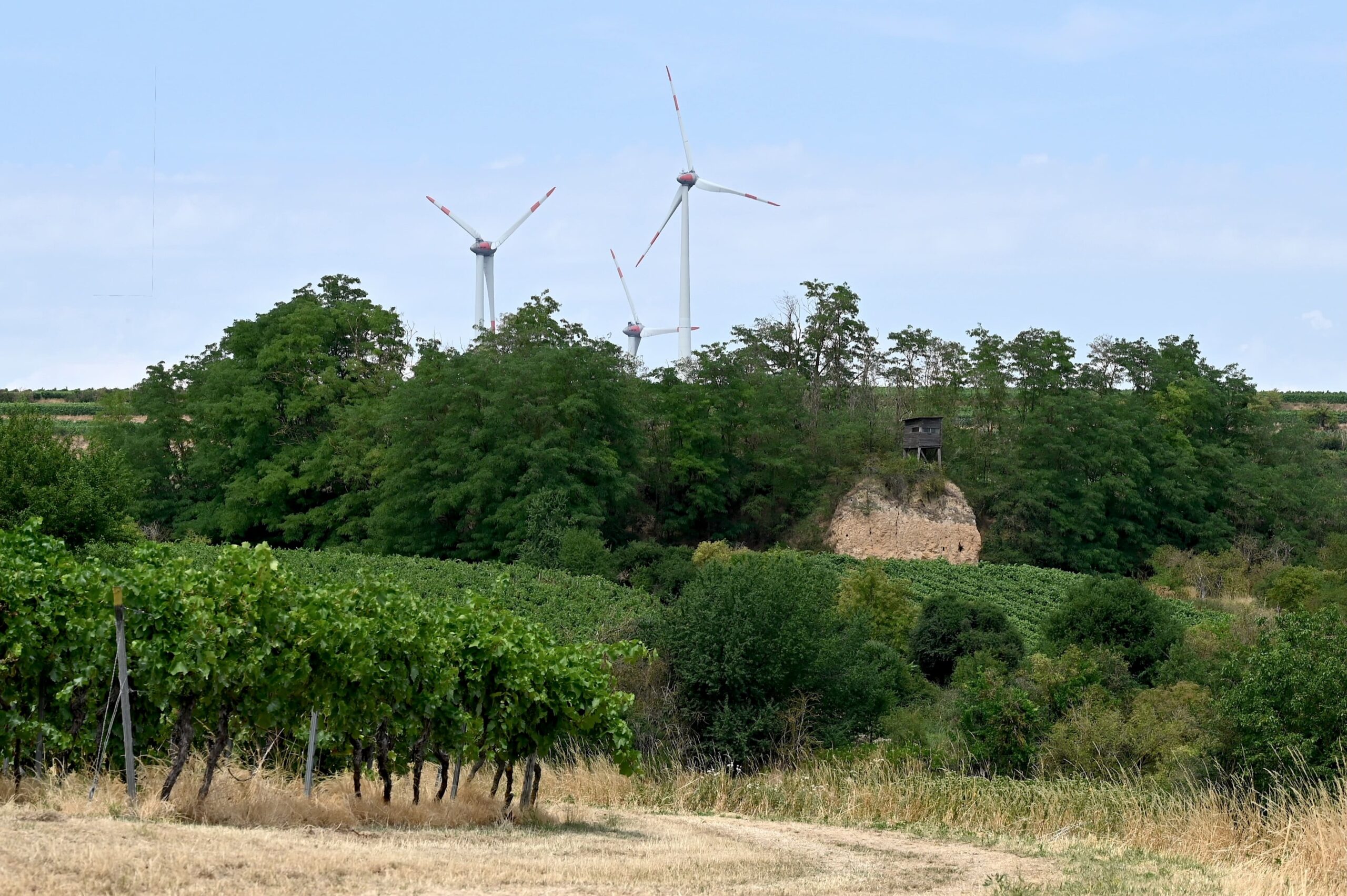
From here, the trail runs westward to the Steinkaut, a former quarry with a striking depression and steep, towering loess cliffs. It continues to shape the landscape around Alsheim to this day, and the stone quarried here was used to build houses, barns, and walls throughout the community. Limestone and loess were once quarried here; today, grapevines grow in this area, and the adjacent lands are protected as a biotope and wildlife sanctuary.
The Steinkaut, a former quarry.
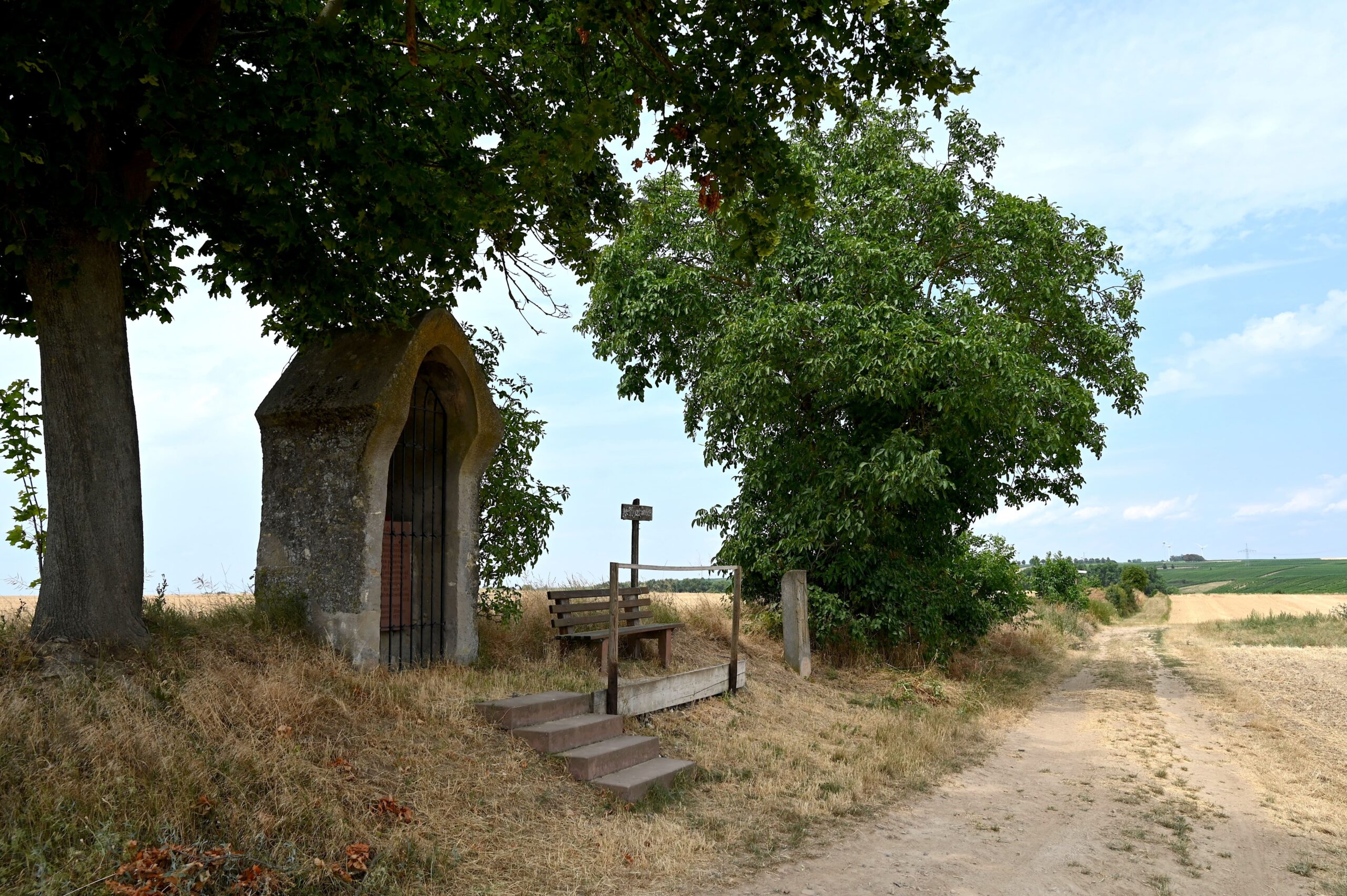
It’s not far to the wayside shrine; you can reach it via Alte Mainzer Straße and a narrow sunken path. The small shrine was built in 1440 by the Maria Münster Monastery in Worms on the border between the municipalities of Alsheim and Dorn-Dürkheim. At the highest point of the tour, a pleasantly cool breeze gently sweeps across the hills of Rheinhessen, and you can see all the way to the Bergstraße and the Odenwald.
Historic Shrine
Dorschberger Hohl and the Refreshing Weißmühl Spring
After a short break and a few minutes’ walk, the Hiwweltour takes me through the Dorschberger Hohl, with its steppe grasslands, and through a nature reserve home to rare plant and animal species. Field milkwort (steppe witch), dwarf cherry, and hairy brome grass all call the Hohl home, as do wild bees, sand wasps, and white tower snails. There are also pipistrelles, sand lizards, and the wall fox (butterfly).
The deeply incised Dorschberger Hohl on the Hiwweltour Alsheimer Hohlwege
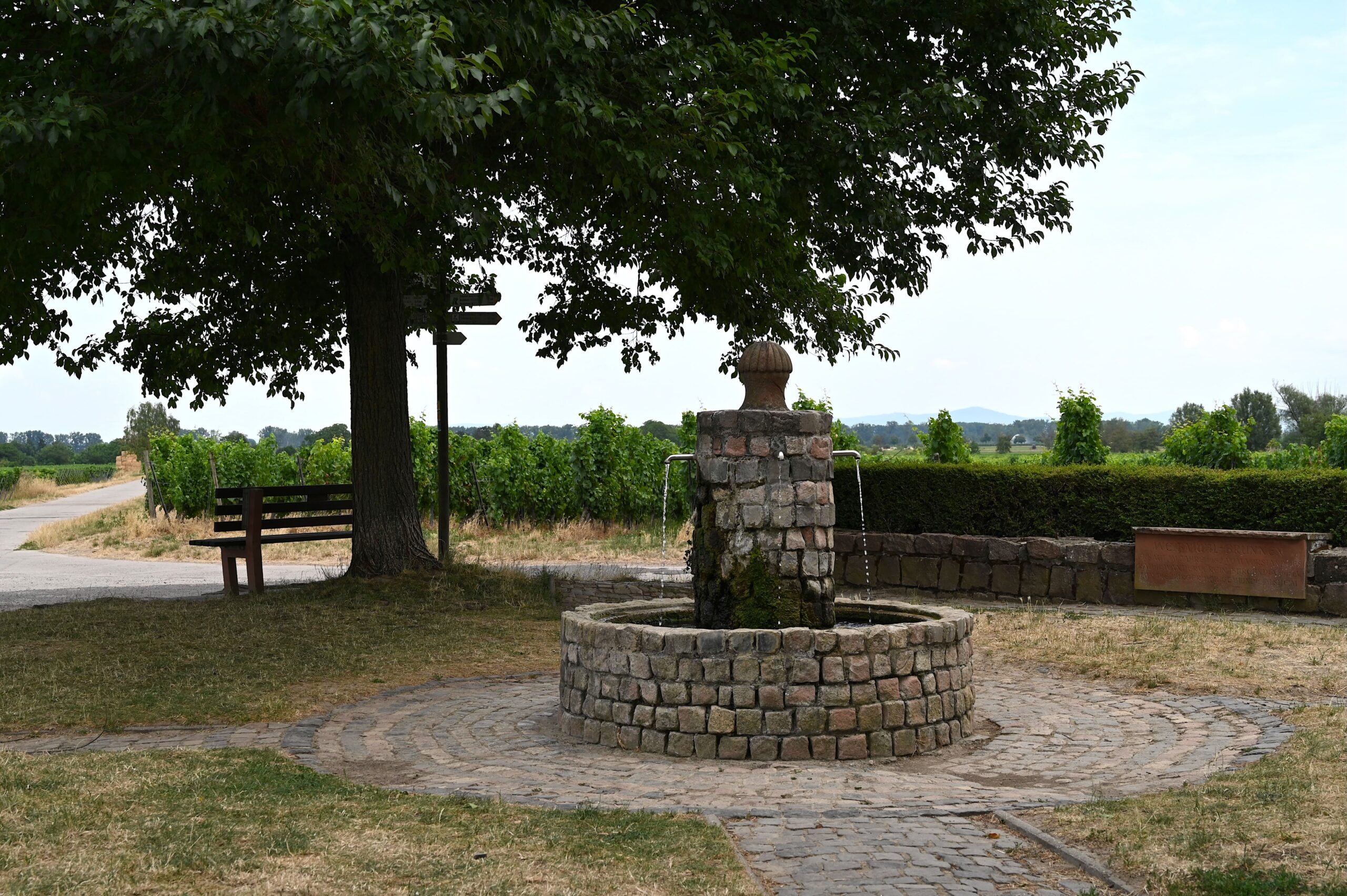
Weißmühl Fountain with a Viewing Bench
At the Weißmühlbrunnen fountain near the historic Weißmühle, I can refresh myself one last time before tackling the final short stretch to Alsheim. The event food service „At the Old Wine Press House“ With its lovely summer garden, it’s located right on the hiking trail and is a great place to stop for a break. The menu offers hikers Flammkuchen as well as dishes and wines from Rheinhessen. Near the Alsheim Community Center—the starting and ending point of the tour—there’s also the Café Zuckerkuss, keeping in mind the days off.
St. Boniface Pagan Tower Church with the "Saracen Tower"
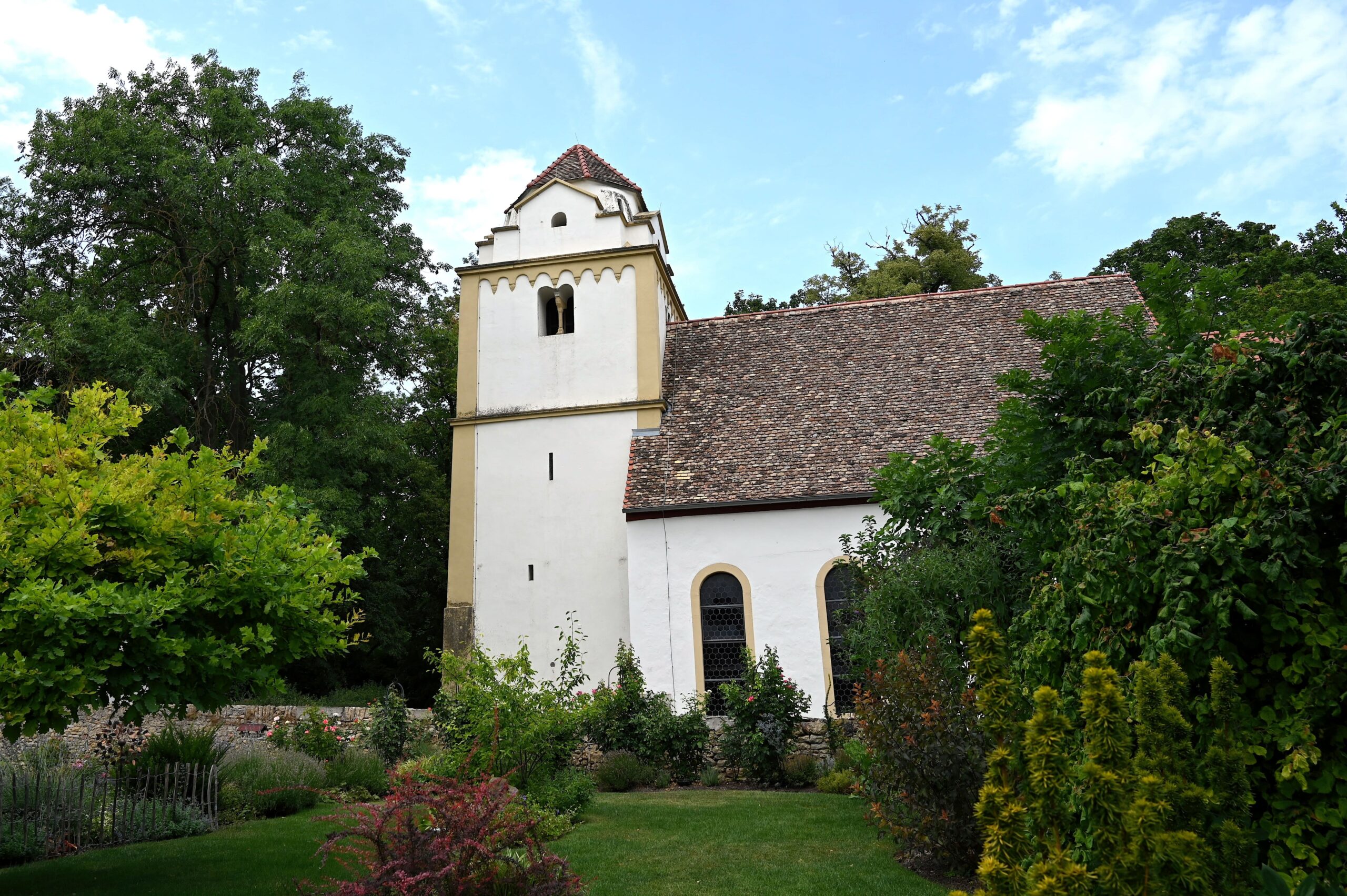
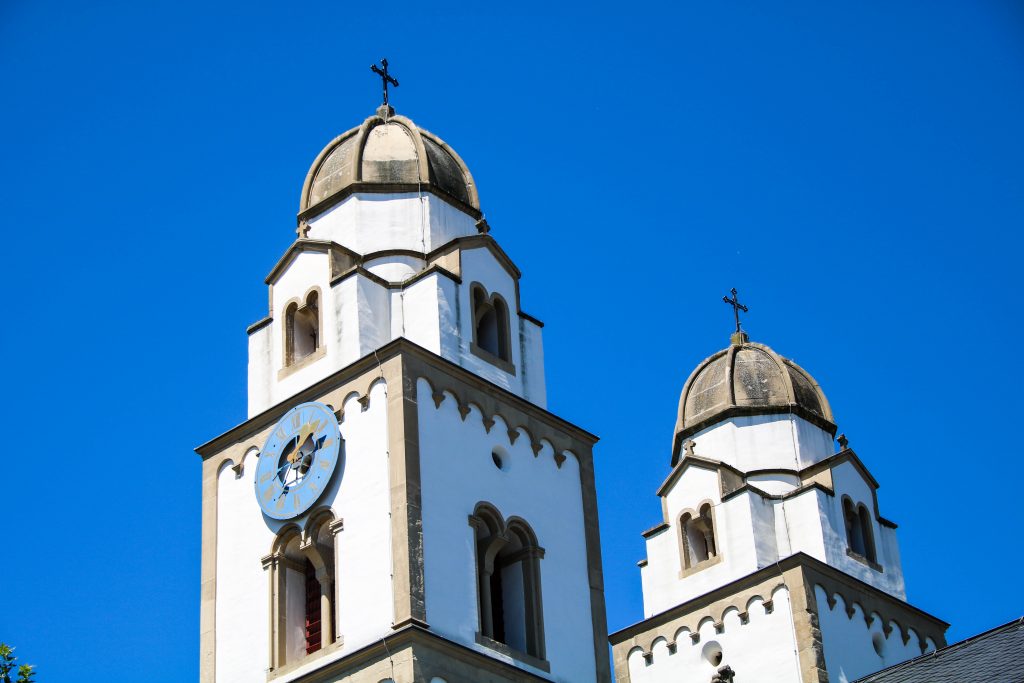
A wonderful way to end the hike is a visit to the St. Boniface Pagan Tower Church Just before you reach your destination, a true Rheinhessen gem. The Protestant parish church was built in the Romanesque style around 1200; its „Saracen Tower,“ with its Oriental-inspired design, is particularly remarkable. Inside, you can admire the artful remnants of wall paintings and a magnificent choir arch. The cemetery park, with its historic gravestones and old trees, is also very beautiful. In Alsheim, there is also the Catholic parish church of the Assumption of Mary, featuring architectural elements from the Late Gothic and Baroque periods.
St. Boniface Heath Tower Church in Alsheim
My conclusion
The Alsheimer Hohlewege Hiwweltour is wonderfully varied and offers a diverse landscape. Quiet stretches through the unique sunken paths alternate with wide country roads that offer hikers magnificent views into the distance. In addition to the rich variety of plant and animal life in the sunken paths, my personal highlights are the ruins of St. Maria Magdalena Church in the hamlet of Hangen-Wahlheim and the Heidenturm Church of St. Boniface in Alsheim. I find it convenient that there’s a place to stop for refreshments at the end of the hike and that the trail consists of two sections, allowing you to shorten the tour.
Guided Hikes on the Hiwweltour
The Alsheim Sunken Paths Group offers open-to-the-public guided tours on the Hiwweltour, which take place from March through October on the third Sunday of every month. There are no guided tours on the third weekend in September due to the Alsheim Wine Hike. In addition, you can request guided tours for groups from the Alsheim Sunken Paths Group (email address: kontakt@alsheimer-hohlwege.de).
Tips
You can reach the Hiwweltour by public transportation; from the Alsheim train station, there is a marked trail (about 500 meters long) that leads to the starting point of the hike. For the hike, we recommend non-slip footwear, comfortable hiking clothes, something to drink, and a snack in your backpack.
The Alsheimer Hohlwege Hiwweltour is one of five Hiwweltours that were launched this year. Hiking reports on the other four „new“ Hiwweltours will also be posted on the Rheinhessenblog from time to time. So stay tuned. You can find information about all Hiwwel tours here.
Having grown up with roots in Rheinhessen and the Palatinate, I enjoy exploring Rheinhessen, the Palatinate and other regions on hikes, bike tours and other outdoor activities. I report about this on my blog "People Abroad" as well as for various media and tourism providers.