




This article was published on 03.04.2023 and updated on 10.04.2025.
Yellow for cheerfulness and joie de vivre: the rare wild tulips of Gau-Odernheim
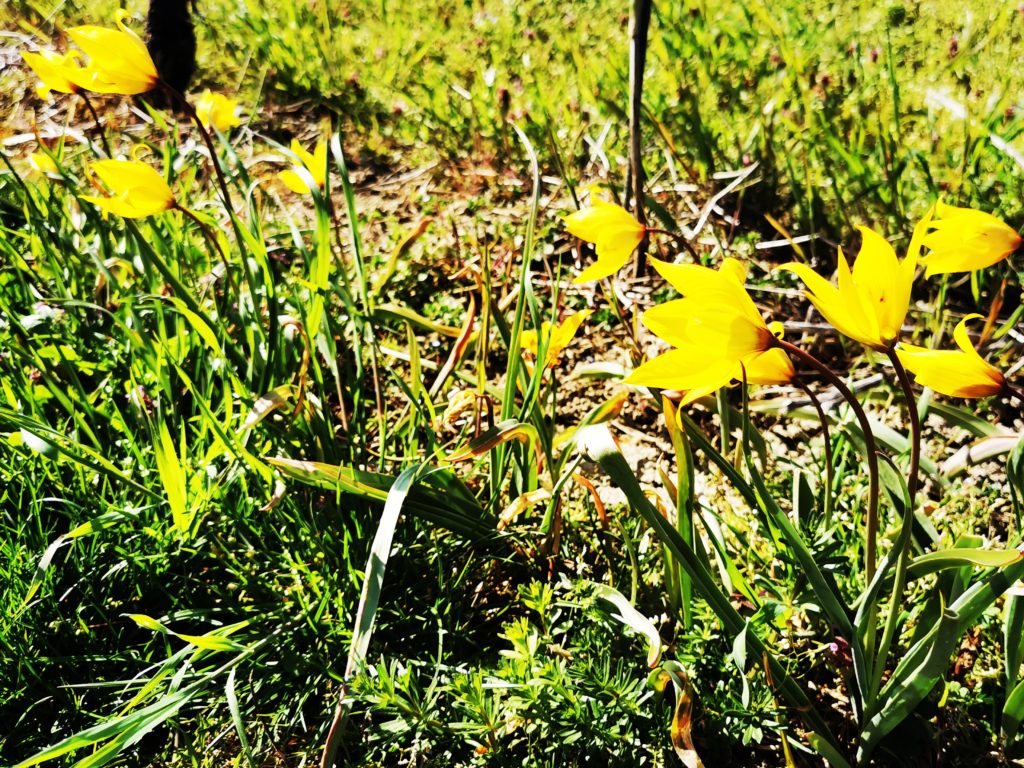
This treasure may adorn itself with a superlative: "largest occurrence of wild tulips north of the Alps".. To admire the Tulipa sylvestris (so the Latin name) is only a few weeks a year usually between mid-April and early May - next week is likely to be. We find: A real excursion tip - yellow stands for cheerfulness and joie de vivre.
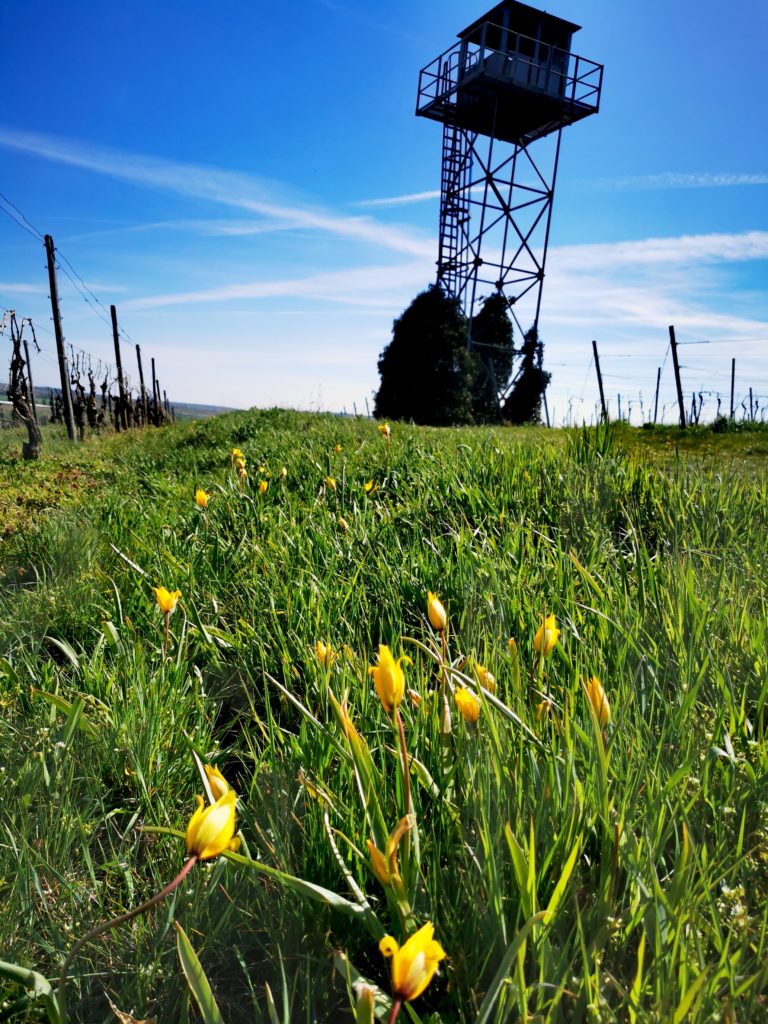
Our author Marina Noble has been to the site several times in recent years. She met Manfred Brunn, chairman of the Gau-Odernheim nature conservation group, and learned a lot of interesting facts. The 125 members of the group are committed to protecting the protected plants. They have even accompanied the chairman his whole life: „Even as a boy, the tulips were there, but nobody was interested in them. Nature conservation was still unknown back then.“ As a result, pesticides and intensive cultivation of the vineyards caused the population to continue to shrink. When the green idea became more and more widespread in the 1980s, Manfred Brunn and some friends took action. They succeeded in having the plants placed under nature protection by the district administration in 1985 - a basis for their preservation.
Flower of the year 40 years ago„
The „Foundation for the Protection of Endangered Plants“, founded by Loki Schmidt, the wife of the former German Chancellor, also recognized the threat early on and named the wild tulip „Flower of the Year“ exactly 40 years ago. The justification can be read on the foundation's website: „The many tulip cultivars that adorn gardens and flower stores in spring in great abundance and variety have left the decline of the wild tulip almost unnoticed. Yet it is - like the yellow narcissus - one of the most remarkable and lovable spring flowers, whose disappearance makes this much-sung season darker in color and poorer in variety.“
Where do wild tulips come from?
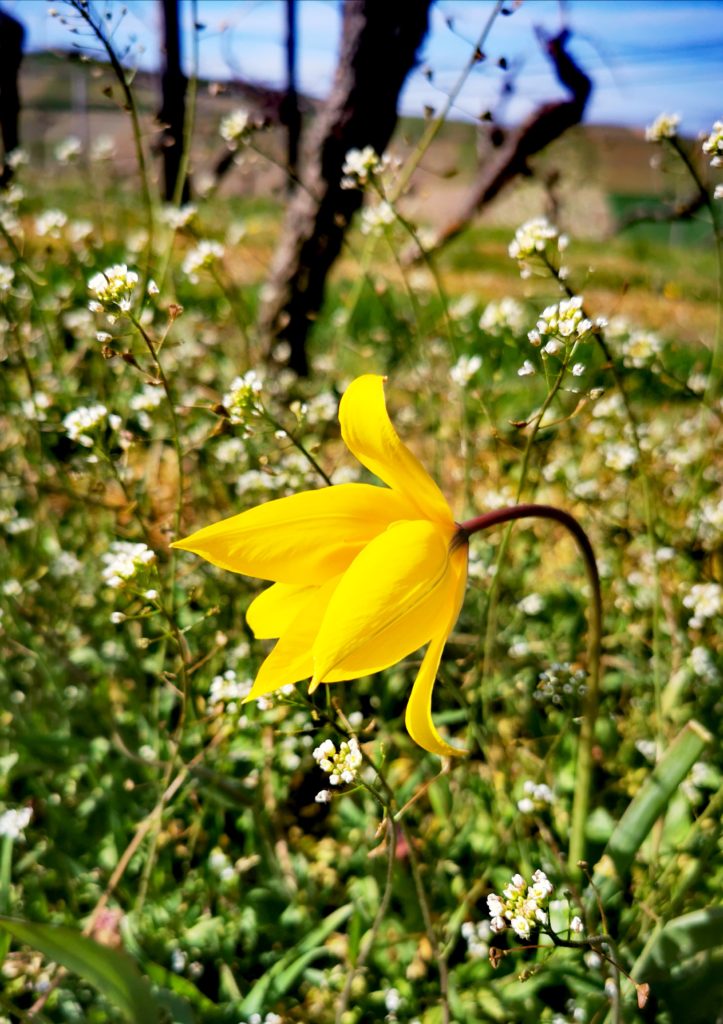
The tulip species was originally at home in the Mediterranean region. There it was considered a particularly noble plant. There are various theories as to how it found its way to us, none of which can be verified. Manfred Brunn considers this story to be the most likely: traders from Italy also came to the markets that took place outside the city walls in the Middle Ages. Their wares included wild tulip bulbs, which they wanted to sell as a remedy. However, these did not sell like hot cakes, probably because the locals were too skeptical. So the traders simply threw the bulbs away in the nearby vineyards. There they multiplied wildly. Good for us!
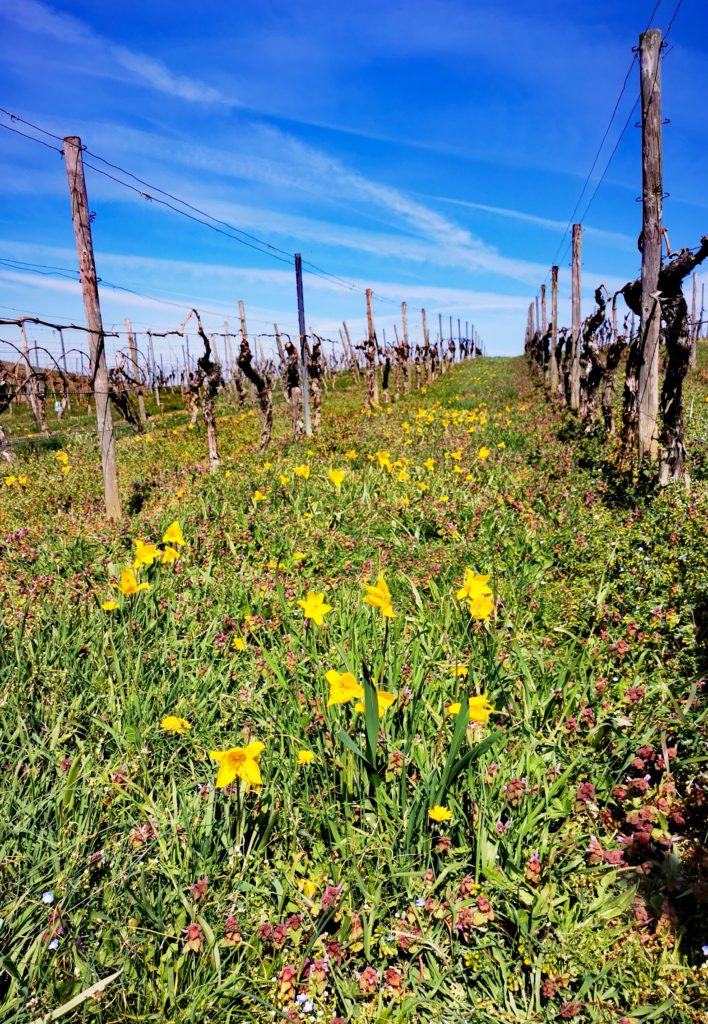
Why do the flowers grow there?
The plants find ideal conditions on the Lieberg. They like the nutrient-rich, moist and permeable loess/clay soil. The mild climate with plenty of sunshine and little rainfall, for which Rheinhessen is known, is also a positive factor. Another important factor is that the winegrowers take the plants into consideration when working the vineyards. Incidentally, the flowers do not grow in the home garden - so there is no point in digging up bulbs. That's forbidden anyway!
What do the tulips look like?
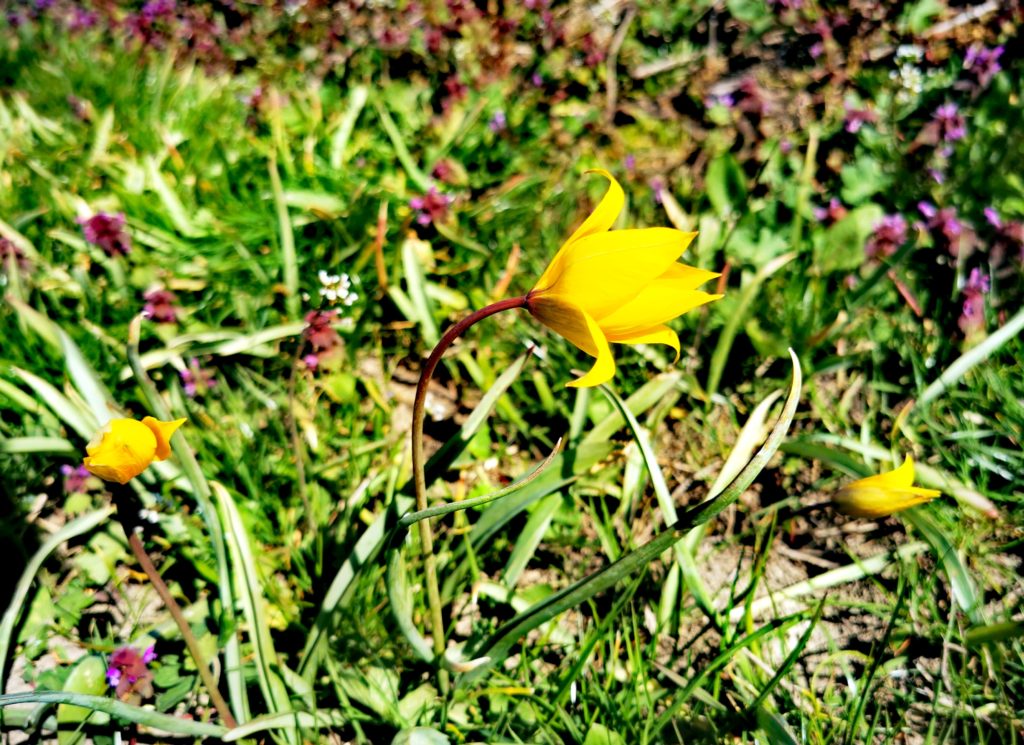
They belong to the lily family - just like the yellow narcissus. Outside the flowering season, the bulbous plants are practically unrecognizable. They grow to a height of 30 to 60 centimeters when fully grown. The blue-green leaves are up to 30 centimetres long, narrow and pointed. The calyxes, which are also pointed, sit on a stem. If you look closely at the colors, you will see that they are greenish or reddish on the outside. The bright yellow color is on the inside of the petals.
When can they be seen?
The exact flowering time depends on various weather factors and lasts a maximum of three weeks, usually from mid-April to early May. If it is hot, the natural spectacle can be over after just one week. The flowers only open when the weather is fine. They close in bad weather and when it gets dark. Information is available from Manfred Brunn, Tel: 06733-6636, E-Mail: m_brunn@t-online.de.
How do I get there?
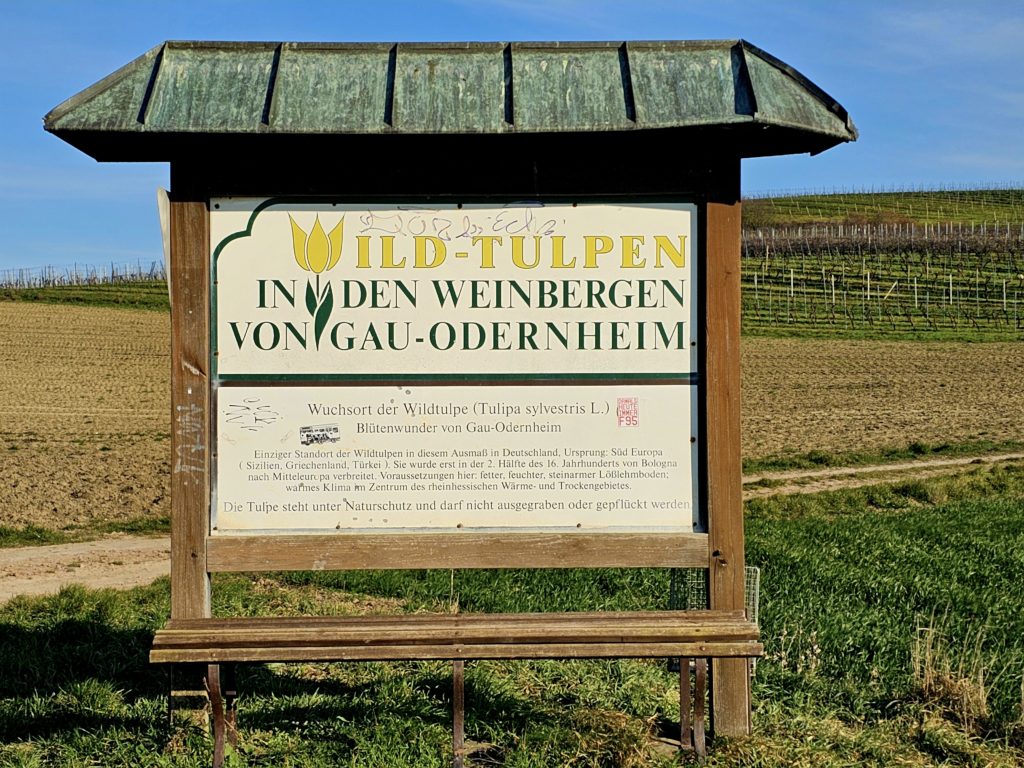
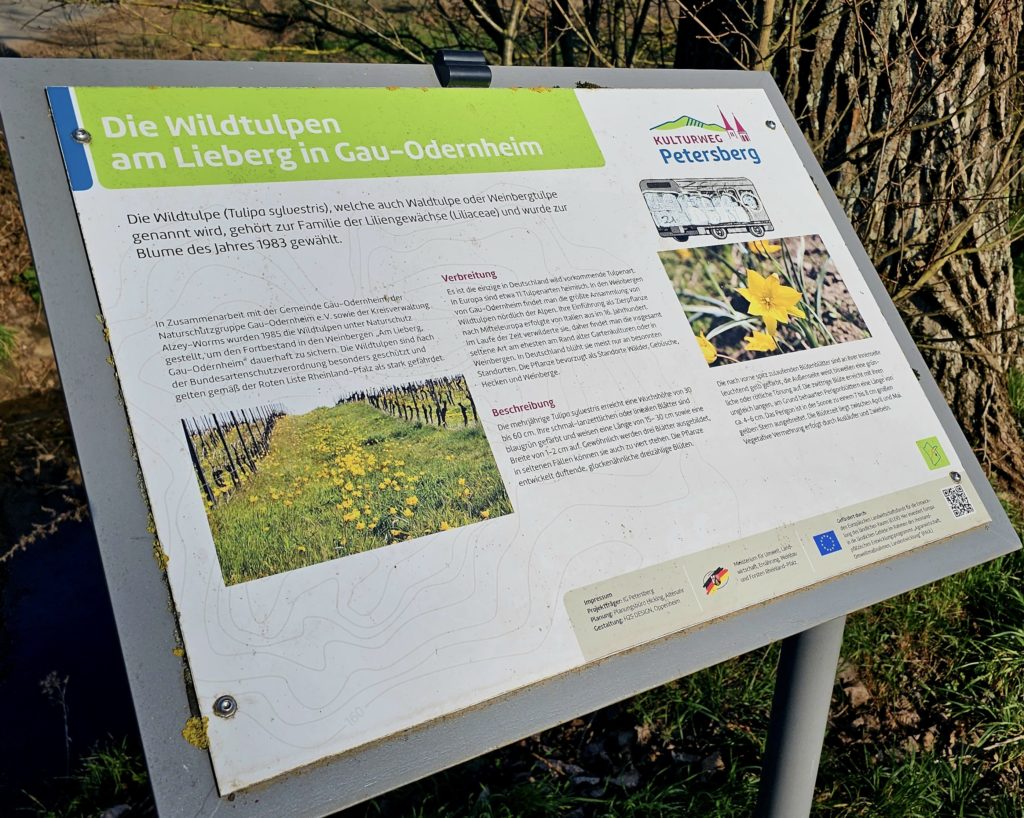
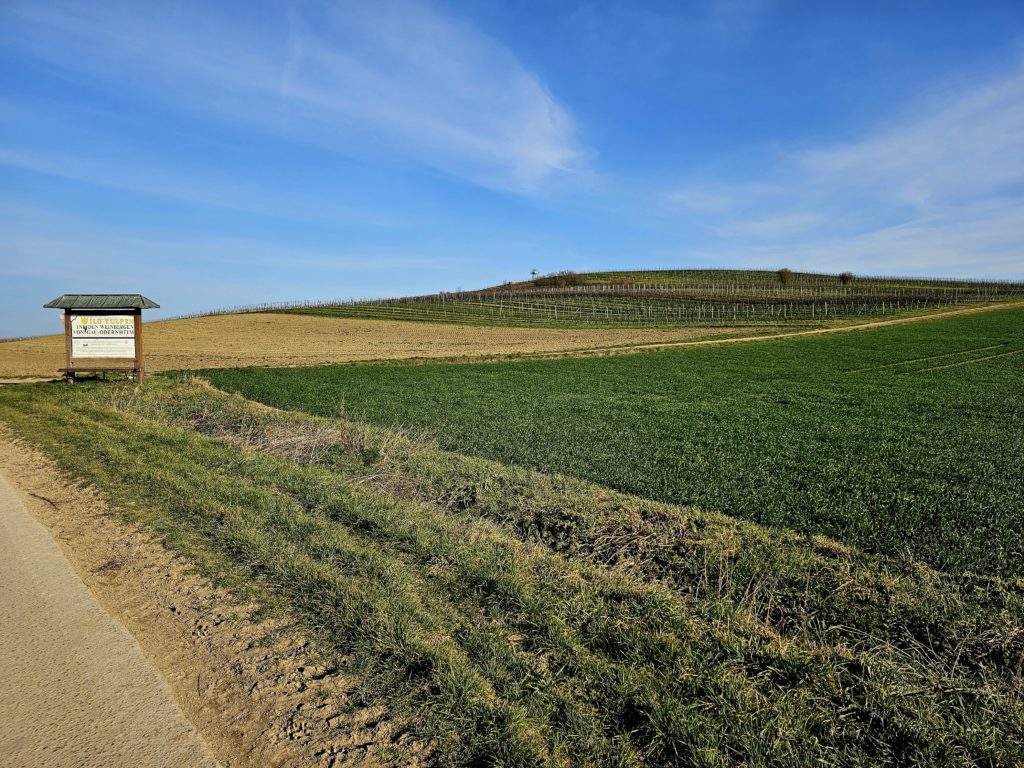
The most environmentally and therefore tulip-friendly way, of course, is by bicycle. If you're on the Selz Valley Cycle Path, you'll also pass through the hilly countryside of Gau-Odernheim. The scenic route follows the Selz River from its source to its mouth (total length: 68.6 kilometers). Selz Valley Cycle Route - Tours - Rheinhessen. From surrounding cities such as Worms or Wörrstadt there are buses to Gau-Odernheim. For cars, there are nearby parking spaces at the Petersberghalle. From there, a slightly ascending path about one kilometer long leads to the foot of the Lieberg. It is paved and well signposted. Initial information is provided by a signboard before crossing the Selz River.
Are the wild tulips only found in Gau-Odernheim?
Nowhere else is there said to be as many as there in the „largest occurrence of wild tulips north of the Alps“. In Rheinhessen, you will find a smaller population in various places in the castle park in the Herrnsheim district of Worms (the castle and the beautiful adjoining 10.5-hectare park, which has been recognized as the most important English landscape park in Rhineland-Palatinate, are also a worthwhile excursion destination at other times of the year). There are also smaller sites in the vineyards of the Landau district of Mörzheim and in Franconia.
WILD TULIP BLOSSOM FESTIVAL, SO APRIL 27, 2025
The Gau-Odernheim nature conservation group has dedicated an event of its own to its botanical treasure at its nature experience site. The wild tulip blossom festival puts the rare plants in the spotlight during guided tours. From the festival site, a tractor shuttle takes visitors who don't want to walk to Lieberg - there and back, or just one way. Interesting facts and explanations about nature and bird conservation are also available at the fairground. Objects of demonstration are a bee hotel, the bat hut and a dry stone wall. An idea for your home could be the Benjes hedge. This hedge, made of branches, shrubs and grass, develops over time into a habitat for birds, hedgehogs, insects and other small animals.
ON THE WAY IN THE AREA
Gau-Odernheim: The community on the Selz River with its half-timbered houses in the old town center is worth a tour. A special feature is the Gothic simultaneous church from the 14th/15th century. There, a wall separates the Catholic and Protestant parts.
Information and accommodation directory: Gau-Odernheim - The small center in the heart of Rheinhessen
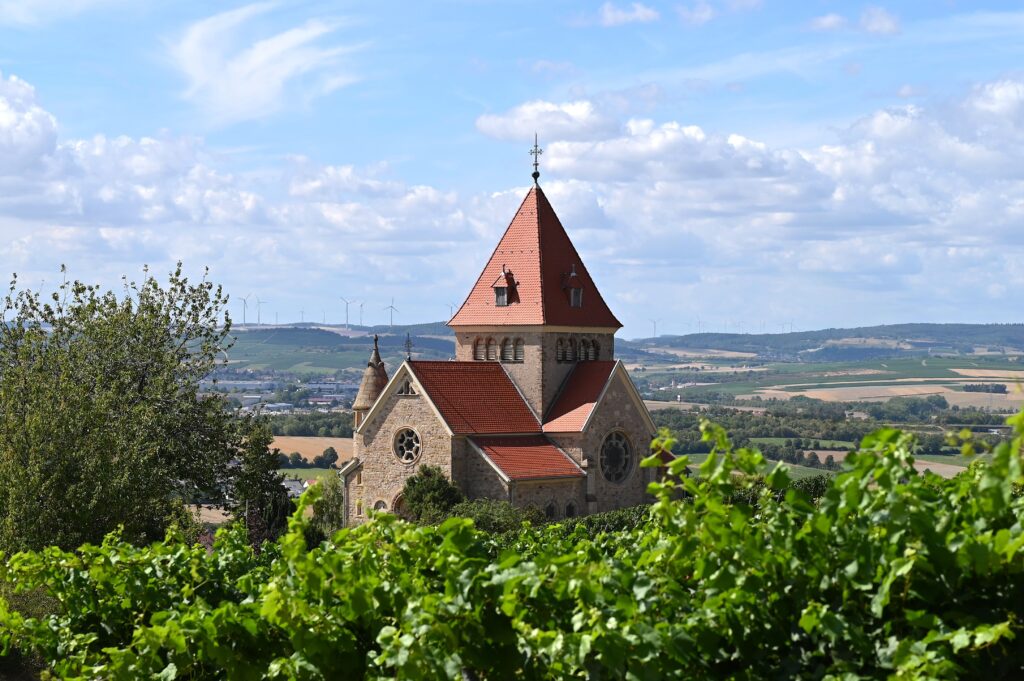
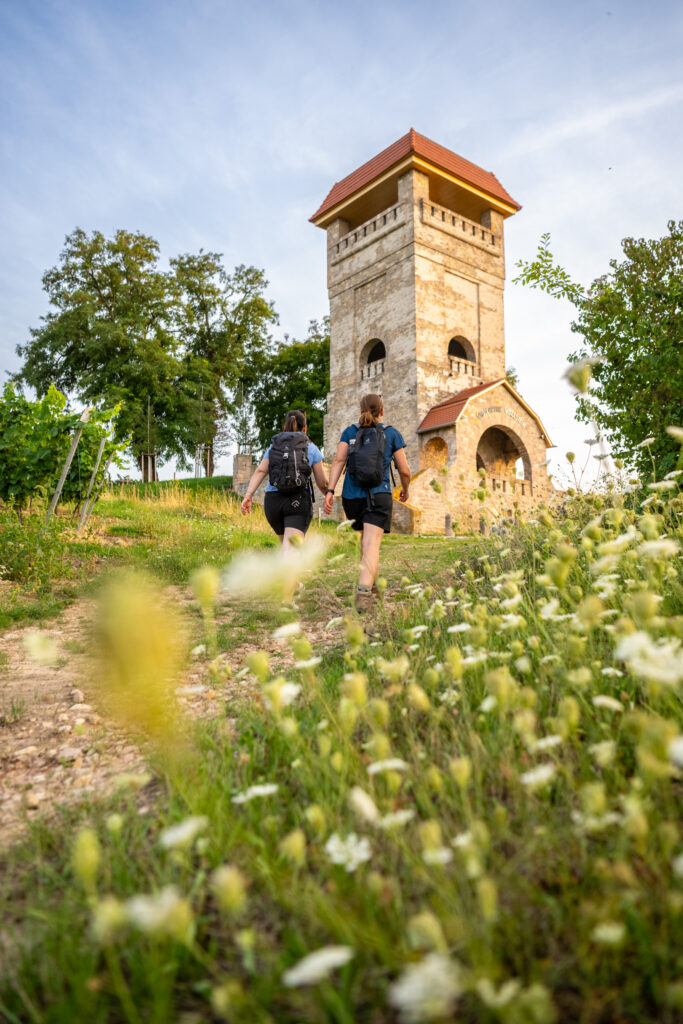
PetersbergThe highest elevation in Rheinhessen at 246 meters lies directly opposite the Lieberg. The relatively steep ascent is rewarded at the top with a panoramic view as far as the Taunus and the Frankfurt skyline. The remains of a Romanesque church are a reminder that the Petersberg was once the destination of pilgrims. A beautiful circular route between Gau-Odernheim and Bechtolsheim is the seven-kilometre „Petersberg Cultural Trail“. Cultural trail Petersberg - Tours - Rheinhessen
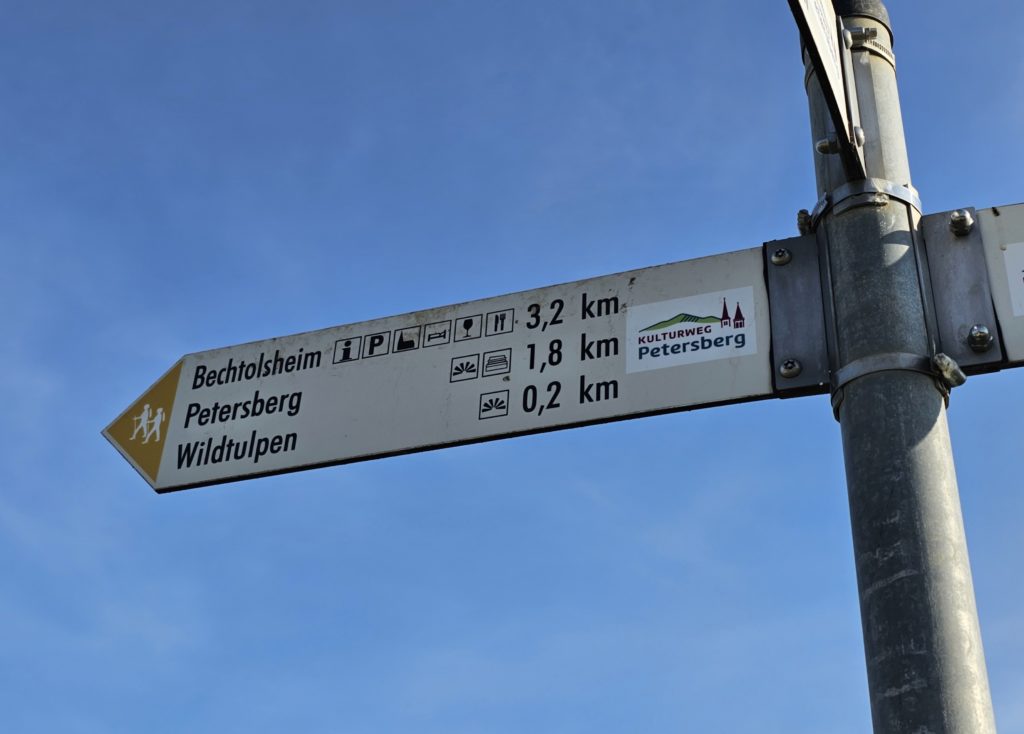
Reading tip for a hike to the wild tulips and Petersberg: Hiking to the Petersberg and the wild tulips near Gau-Odernheim, a blog post by Frank Hamm.






2 Responses
Thanks for pointing out my blog article and the link! In two weeks I will try to catch the wild tulips in bloom again.
Thank you for the kind message, dear colleague, and enjoy your wild tulip viewing this year! Best regards, Marina Noble